A rugged compact SUV with character, and a close cousin to one of my favourites.
Review and photos by Tom Sedens. There are always more photos at the end of my reviews.
The 2025 Mazda CX-50 GS-L represents Mazda’s entry into the “rugged” compact SUV segment, distinguishing itself from the more road-oriented CX-5 with what Mazda is selling as enhanced all-terrain capabilities and a more adventurous design philosophy. As the base trim in the CX-50 lineup, the GS-L delivers fundamental features while maintaining the brand’s signature attention to detail and driving dynamics. And in my opinion, this trim may have everything that most people need.
Pricing: 2025 Mazda CX-50
Base price (GS-L trim): $39,950
Options: $250 – Ash Ochre Leatherette
Freight: $2,095
Price as tested: $42,295
Exterior
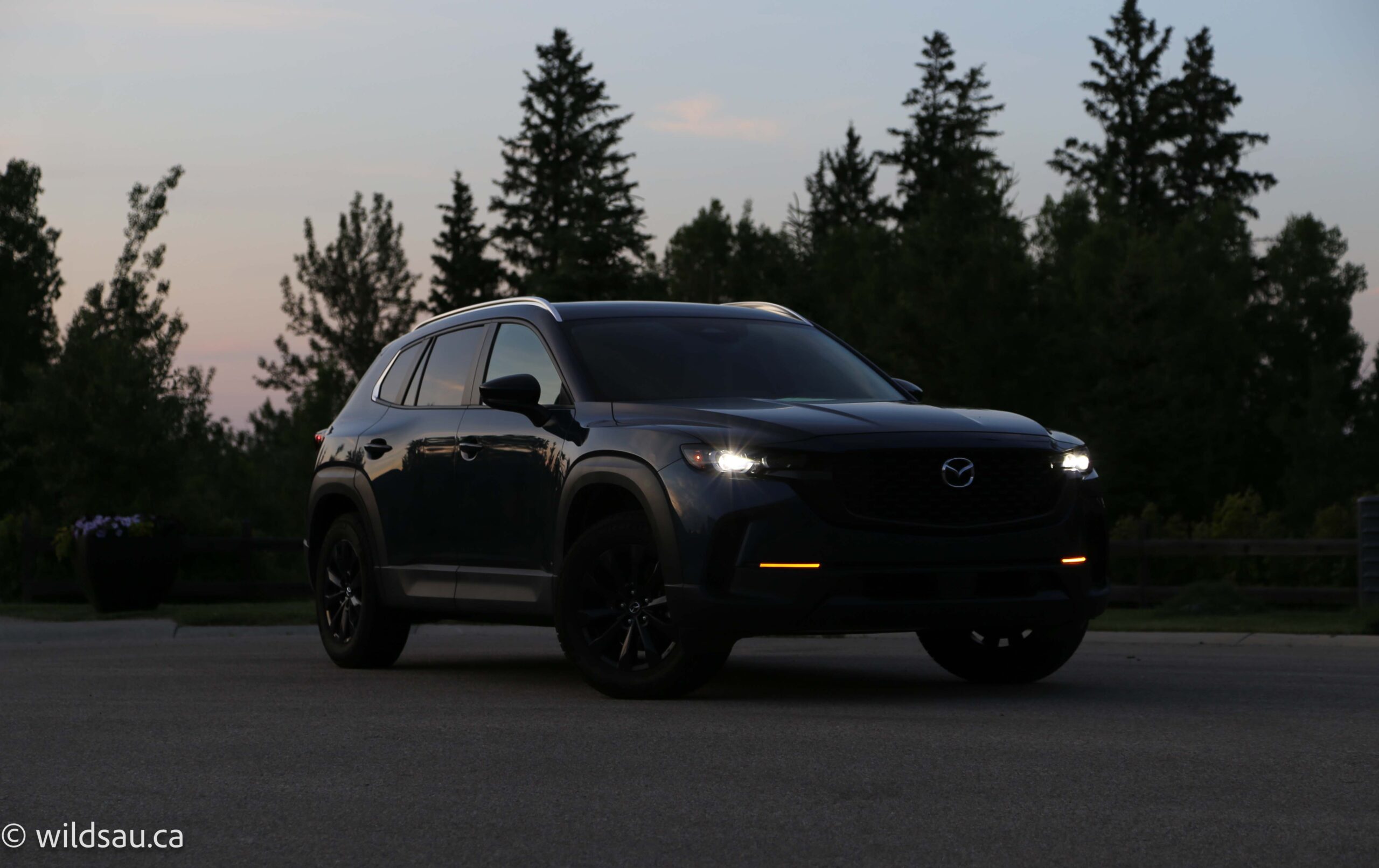
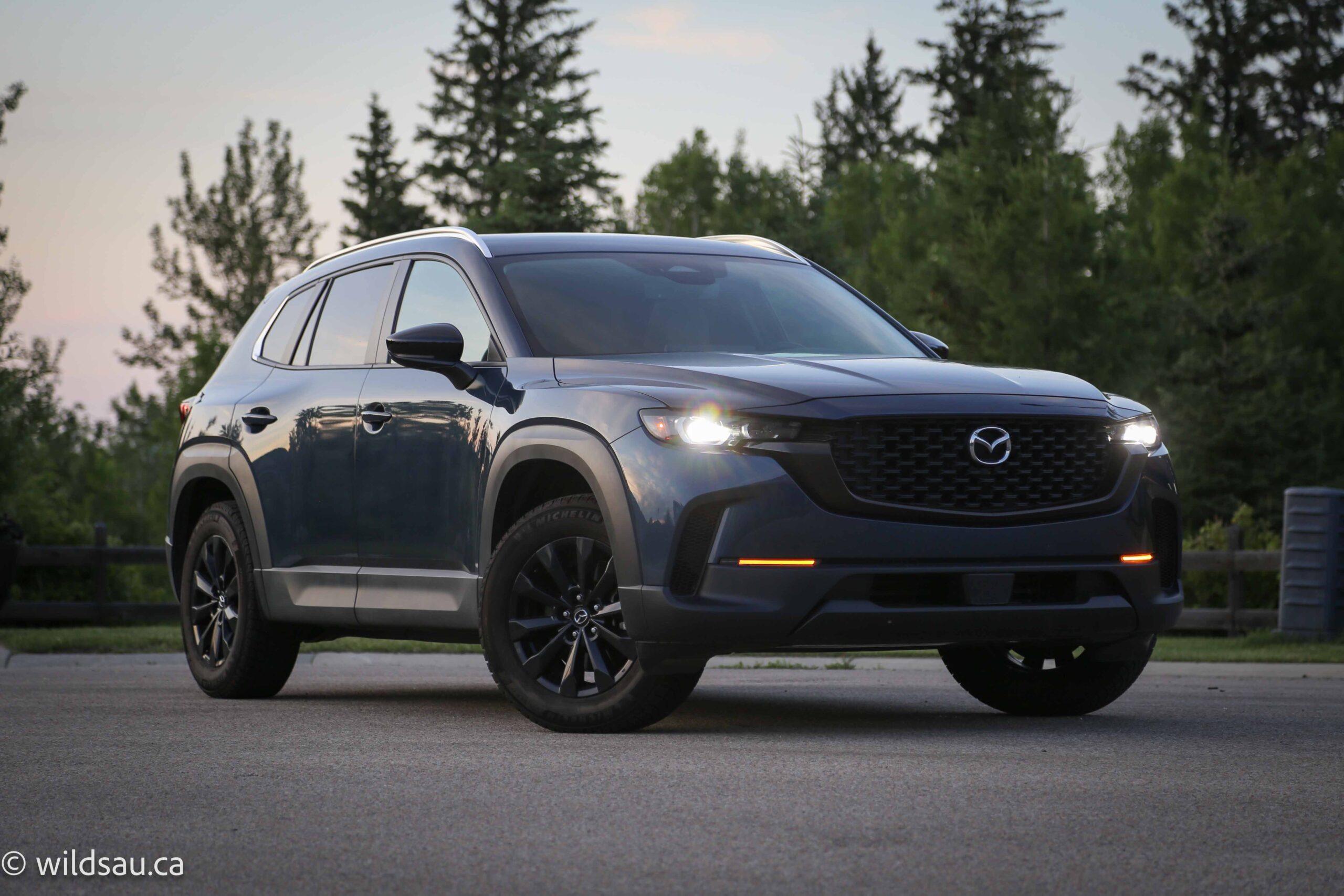
The 2025 CX-50 adopts Mazda’s Kodo design language with specific adaptations for its adventure-oriented positioning. The front fascia features the signature pentagonal grille, larger and more prominent than the CX-5, framed by LED headlight assemblies that extend into the fender lines. The hood incorporates subtle power bulges that suggest capability without appearing overtly aggressive.
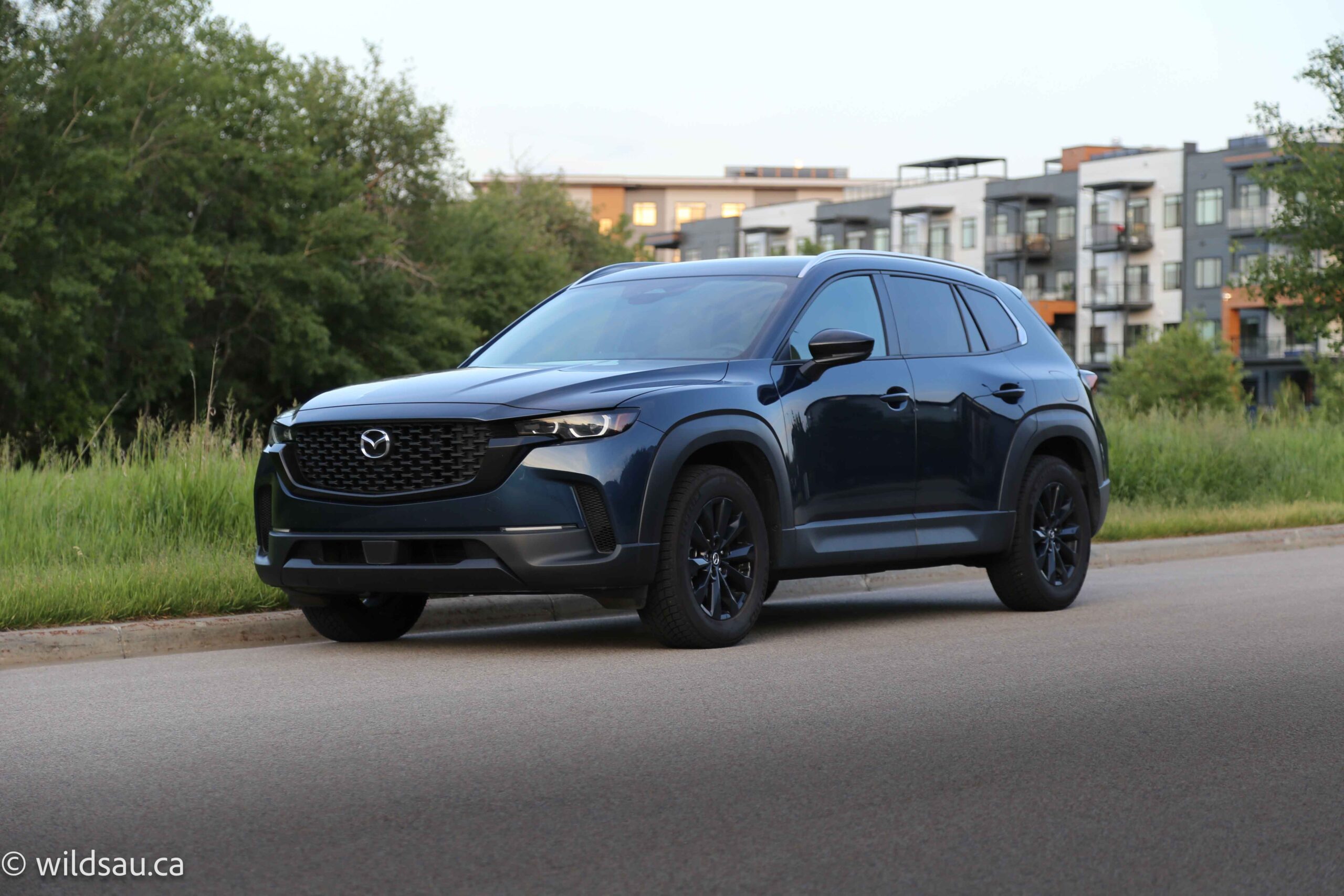
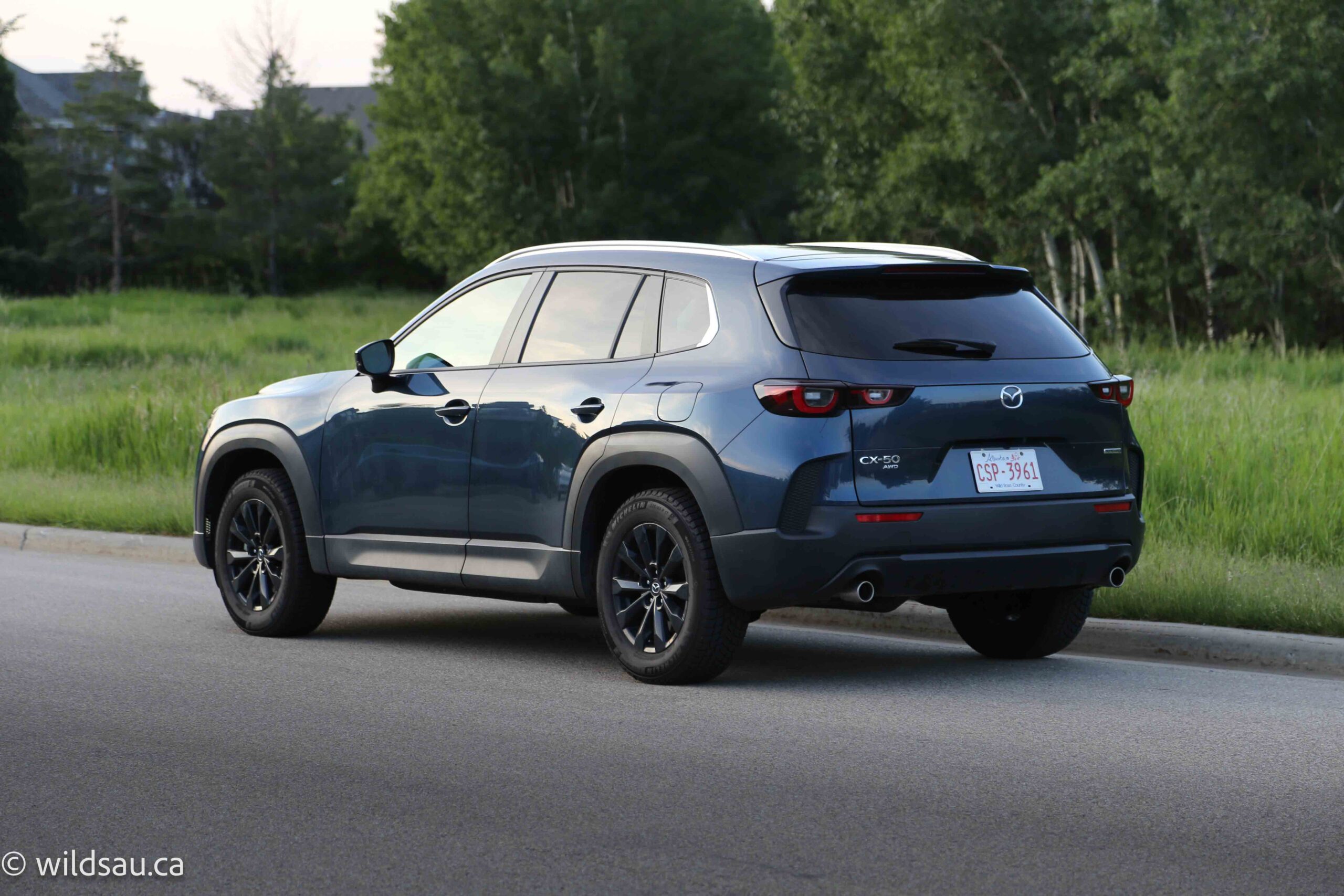
Body cladding extends around the wheel arches and lower door sections, providing both visual ruggedness and practical protection against trail debris and parking lot encounters. This black plastic cladding contrasts with the body paint (an interesting Ingot Blue Metallic for my review sample) and emphasizes the vehicle’s ground clearance and all-terrain intentions. The cladding design integrates smoothly with the body panels rather than appearing as an afterthought.
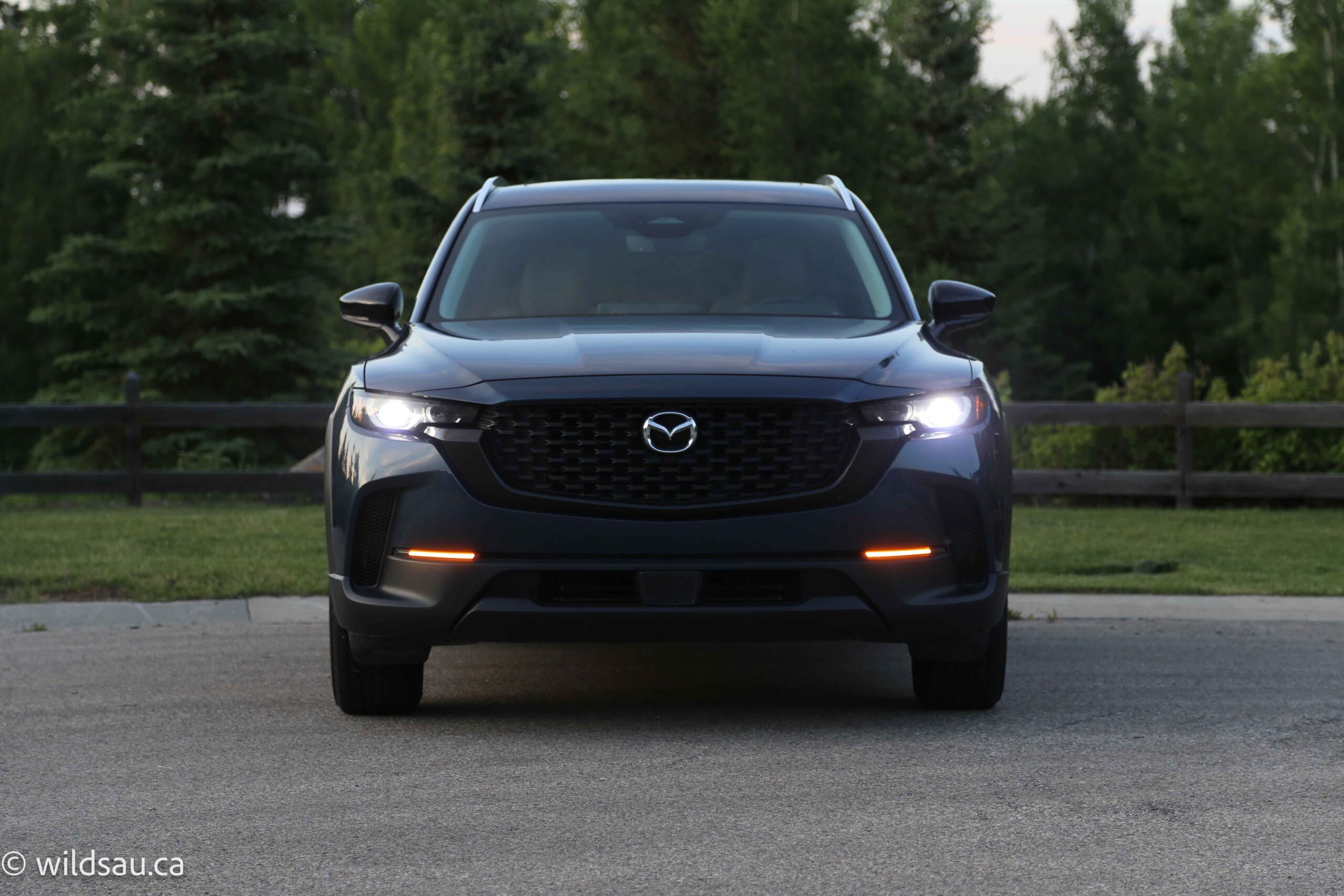
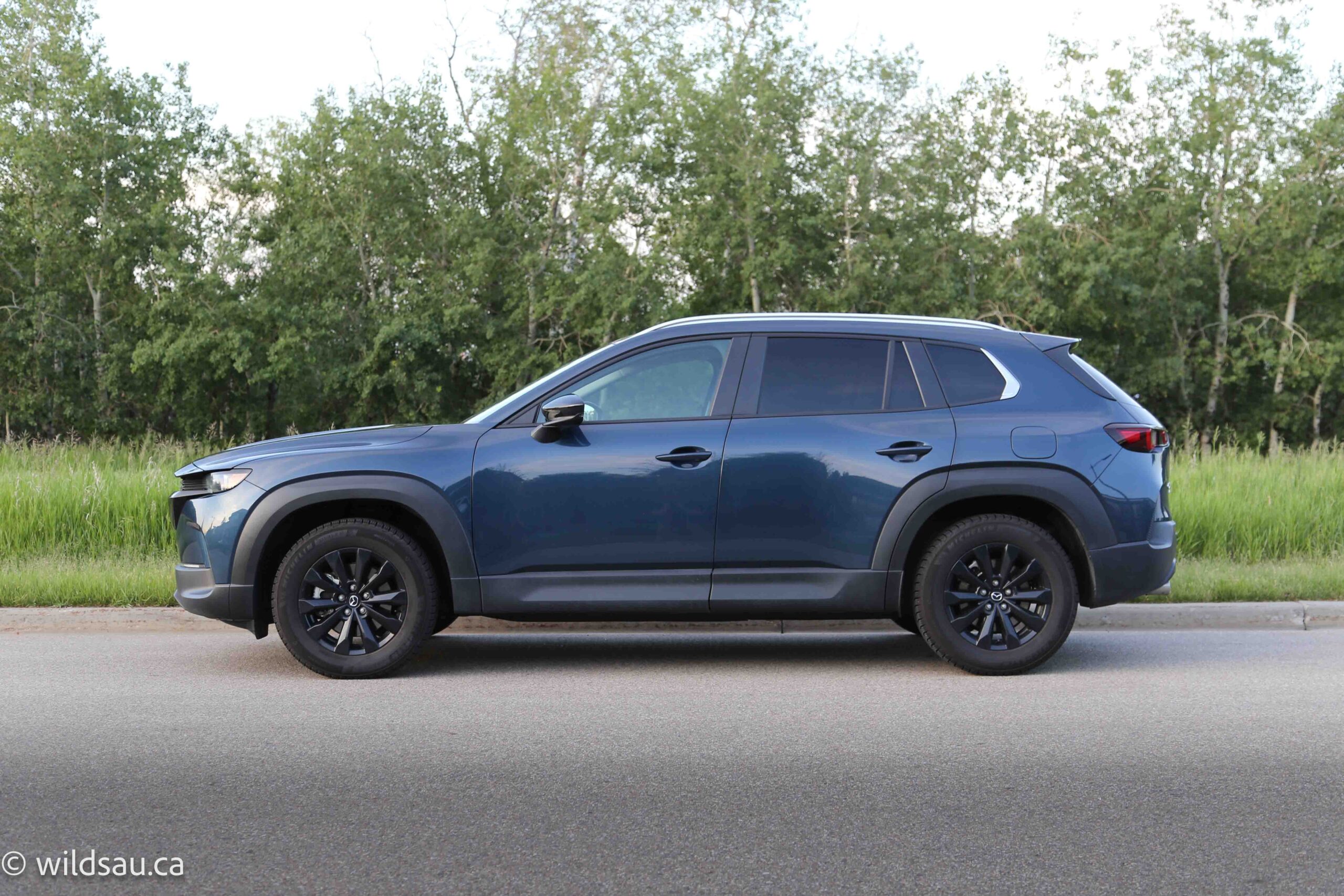
Profile proportions balance crossover practicality with coupe-like styling elements. The roofline slopes gradually toward the rear, creating a more dynamic silhouette than traditional box-shaped SUVs while maintaining reasonable headroom for rear passengers. Body side creases run from the front fender through the door handles to the rear taillights, creating visual length and movement.
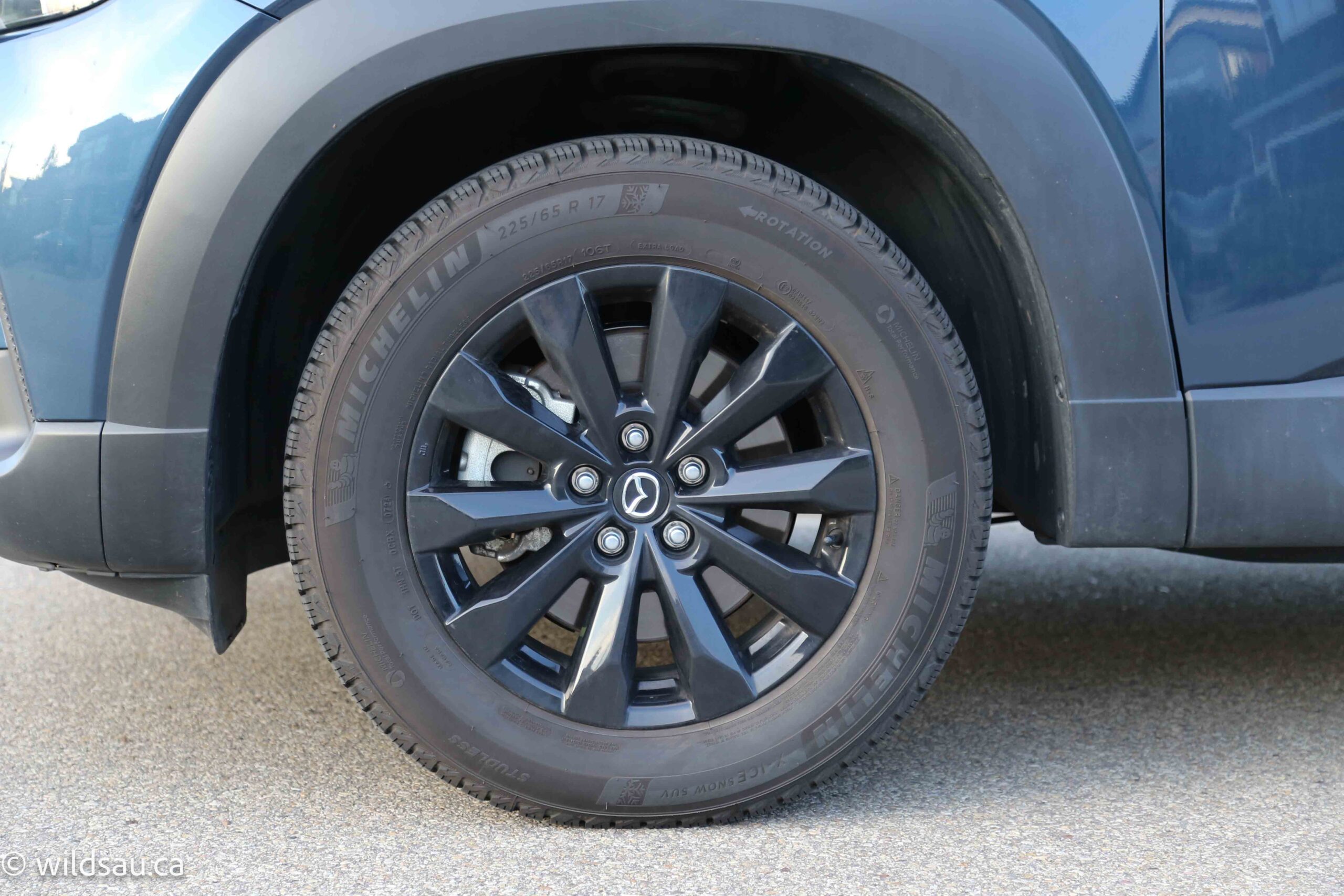
The GS-L trim rides on small-in-today’s world 17-inch wheels – they look great with a machine-finished design that complements the vehicle’s outdoor aesthetic. Tire size measures 225/65R17, providing a balance between on-road comfort and light off-road capability. The wheel design incorporates enough open space for brake cooling while maintaining visual weight appropriate to the vehicle’s proportions.
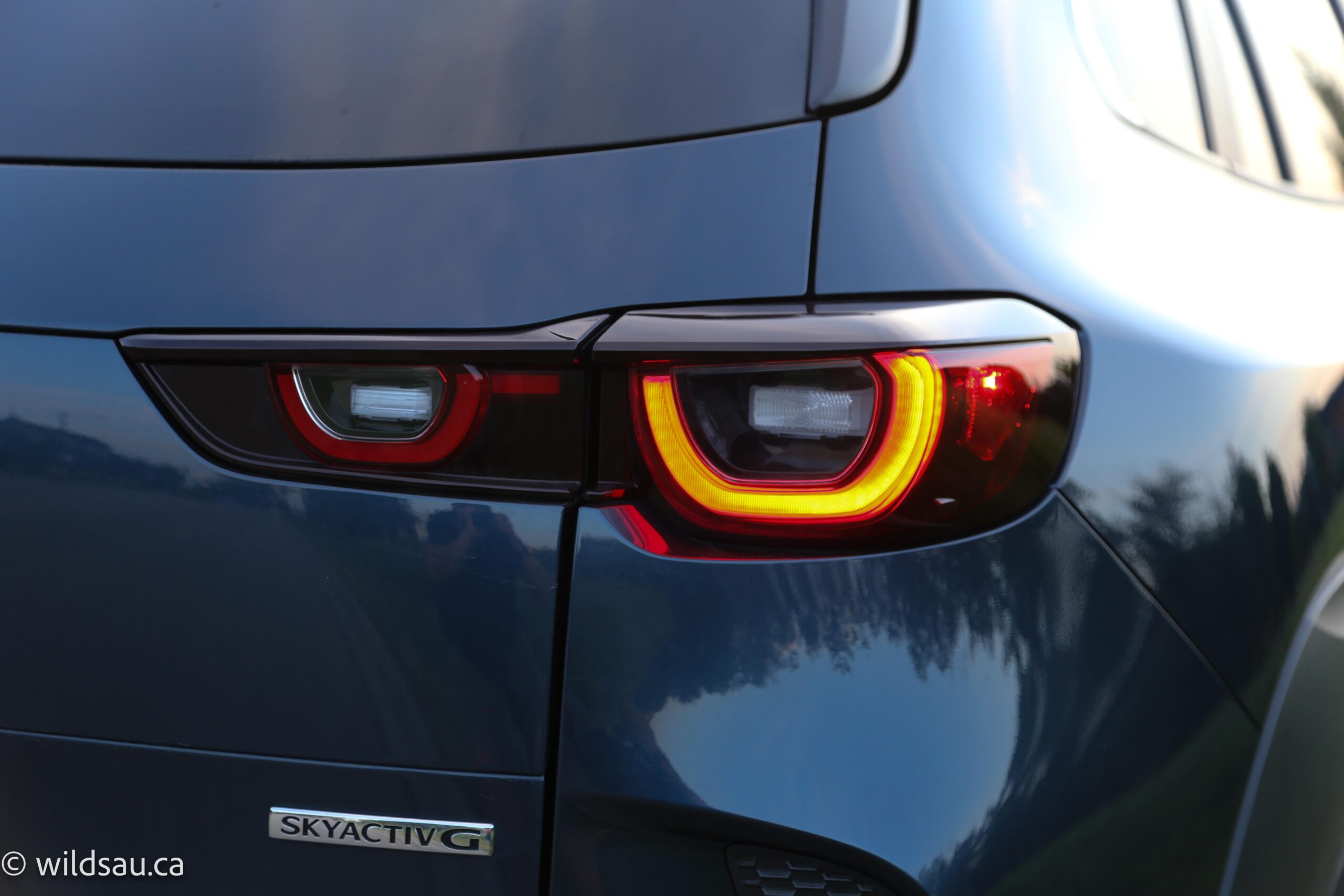
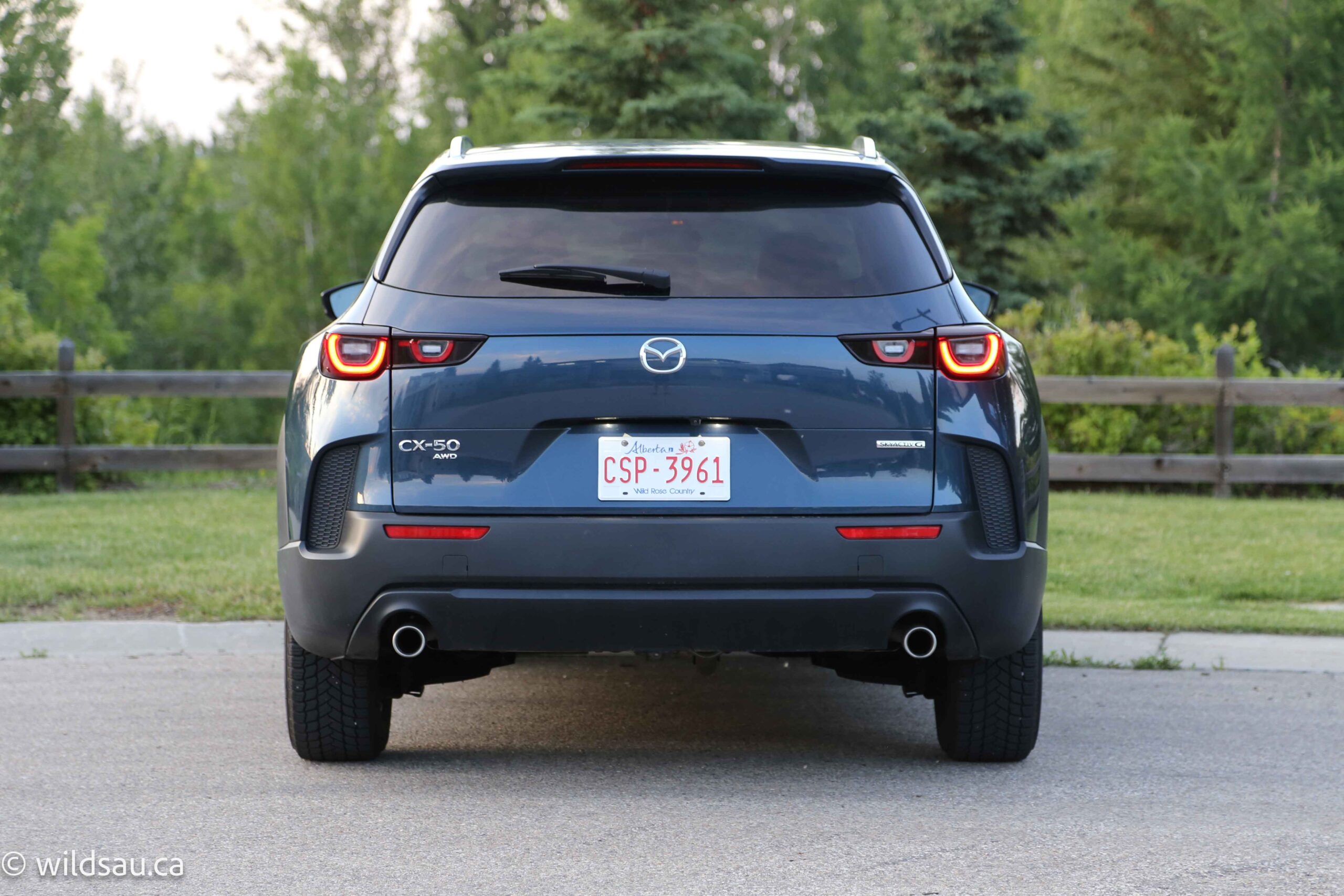
Rear styling features LED taillights that wrap around the body sides, connected by a subtle light bar element that spans the tailgate width. The rear bumper incorporates black cladding similar to the front and sides, with integrated exhaust outlets that remain largely hidden. The overall rear appearance emphasizes width and stability rather than height – I really like the CX-50’s stance.
Ground clearance measures higher than typical compact crossovers, contributing to the vehicle’s adventure-ready appearance and providing practical benefits for navigating rough parking areas, cottage driveways, and light trail conditions. The increased clearance also aids approach and departure angles when encountering curbs, speed bumps, and uneven terrain.
Interior/Tech/Convenience
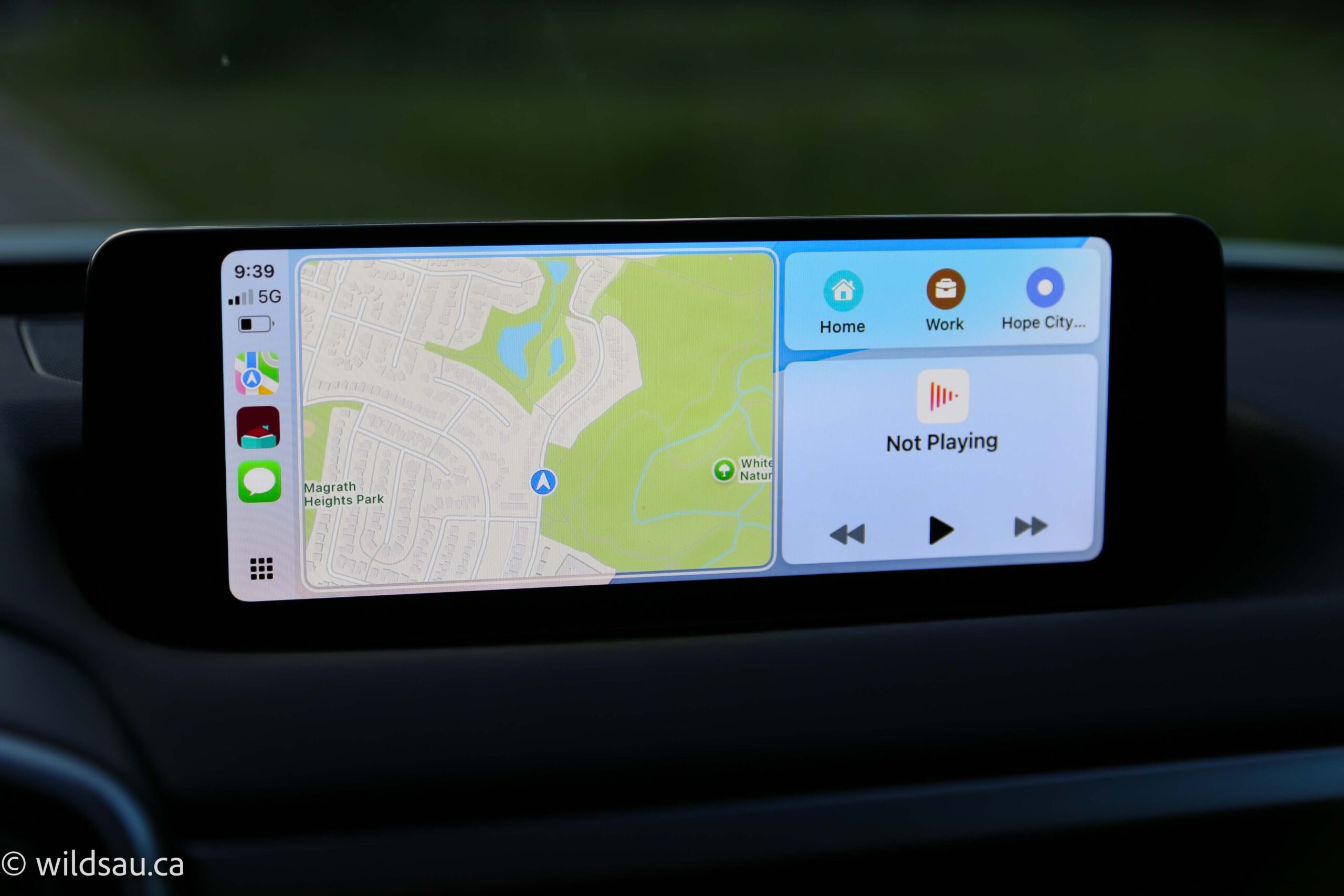
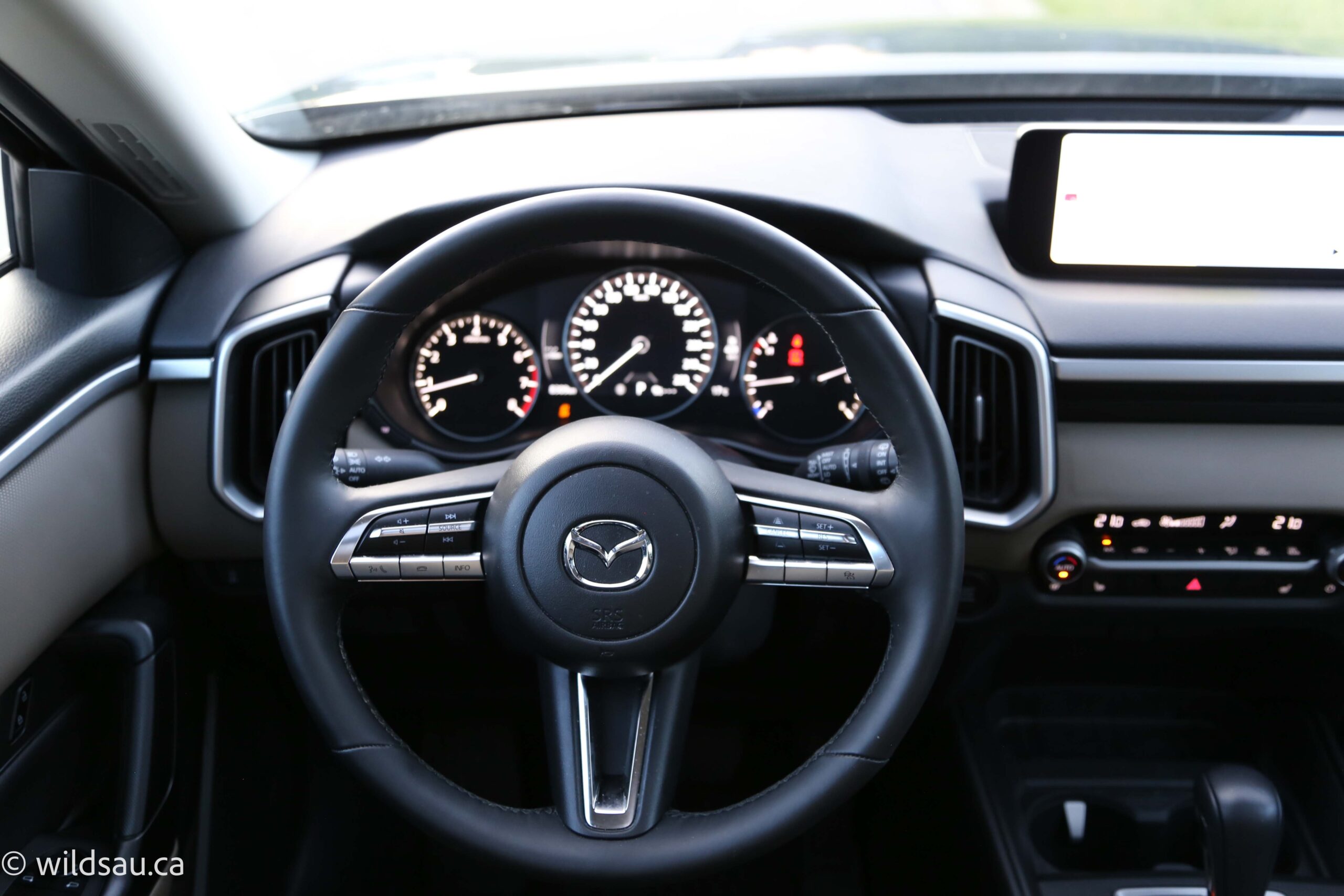
The GS-L’s interior emphasizes functionality over luxury, featuring durable materials appropriate for active lifestyles. The cabin incorporates Mazda’s human-centric design philosophy, with controls positioned for intuitive operation. Standard equipment includes an 8.8-inch infotainment display running Mazda Connect, which supports Apple CarPlay and Android Auto connectivity. When using this connectivity, the screen functions as a touchscreen.
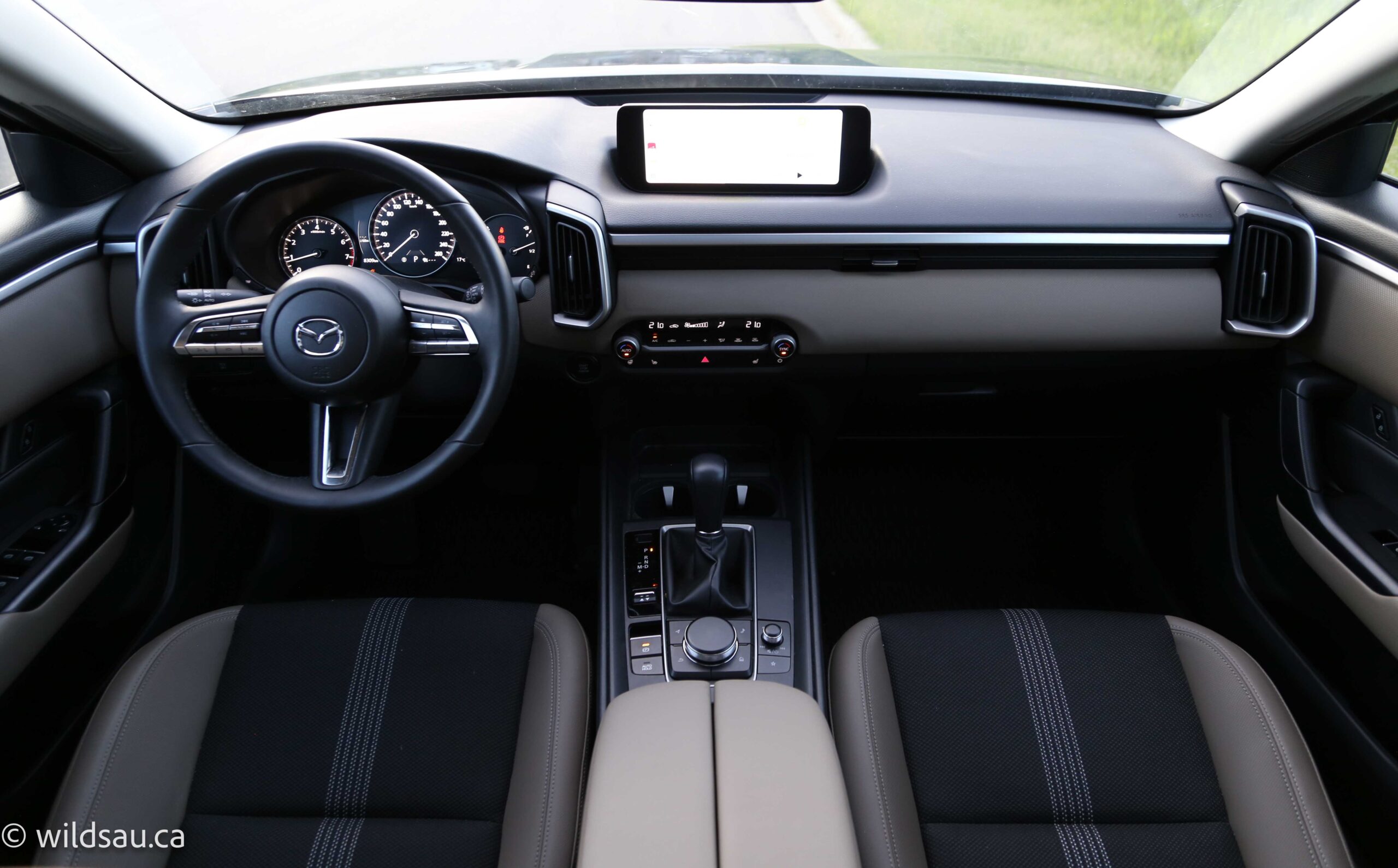
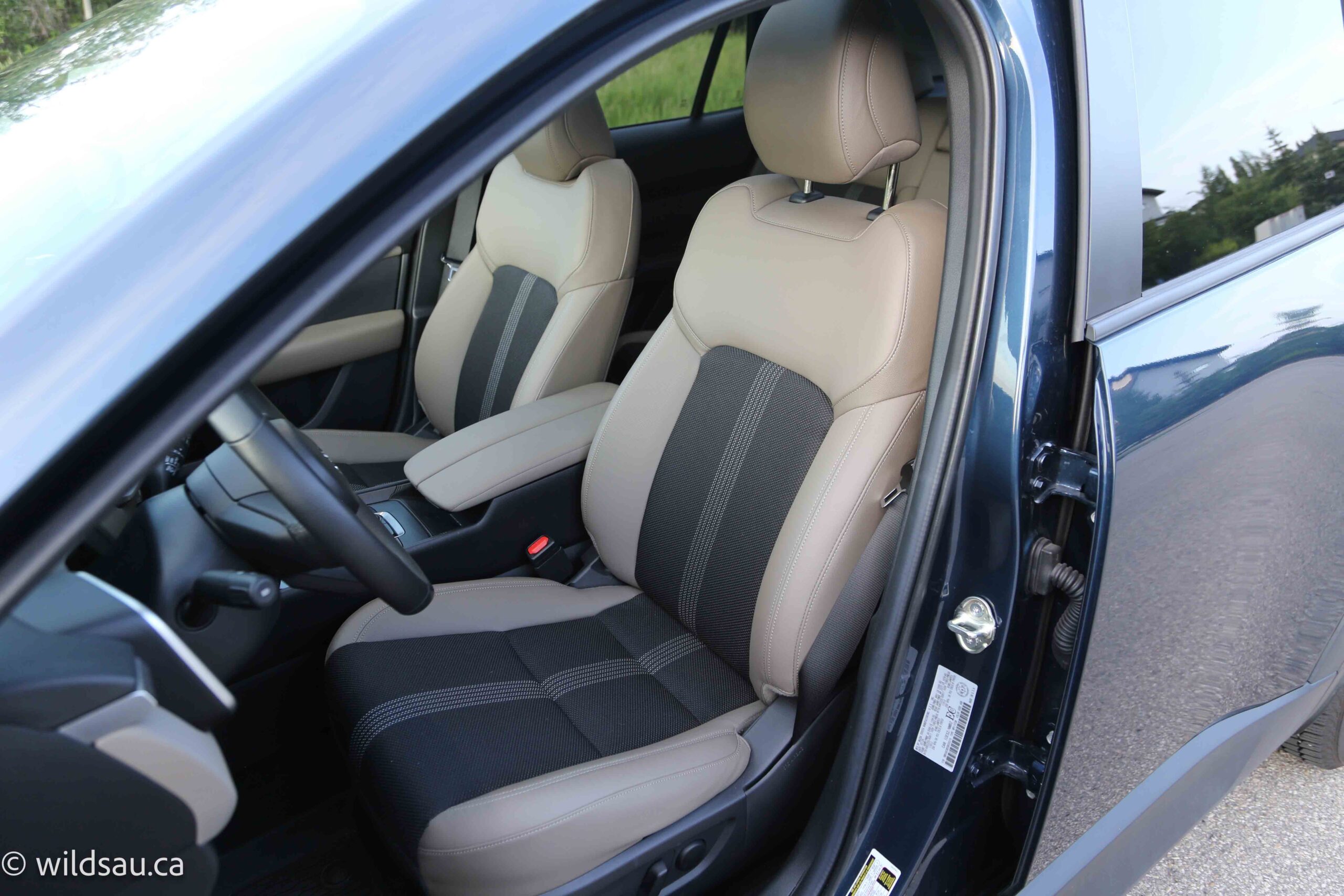
Seating surfaces use cloth upholstery in the GS-L trim, with manual adjustment for the driver’s seat. The front seats provide reasonable support for daily commuting, though they lack the bolstering found in higher trim levels.
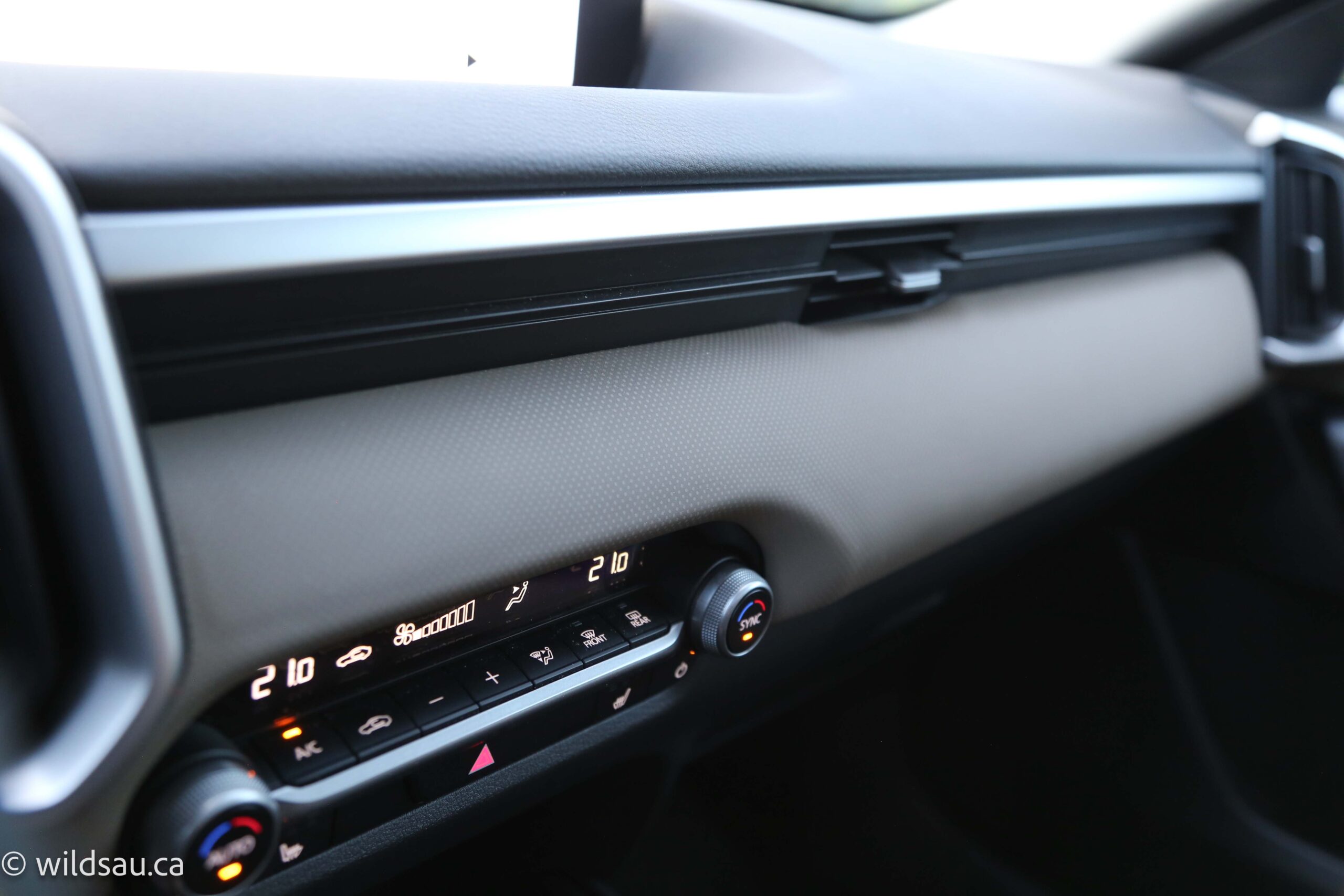
Climate control is managed through automatic dual-zone systems, providing separate temperature controls for driver and passenger zones. The system includes pollen filtration and air quality monitoring capabilities.
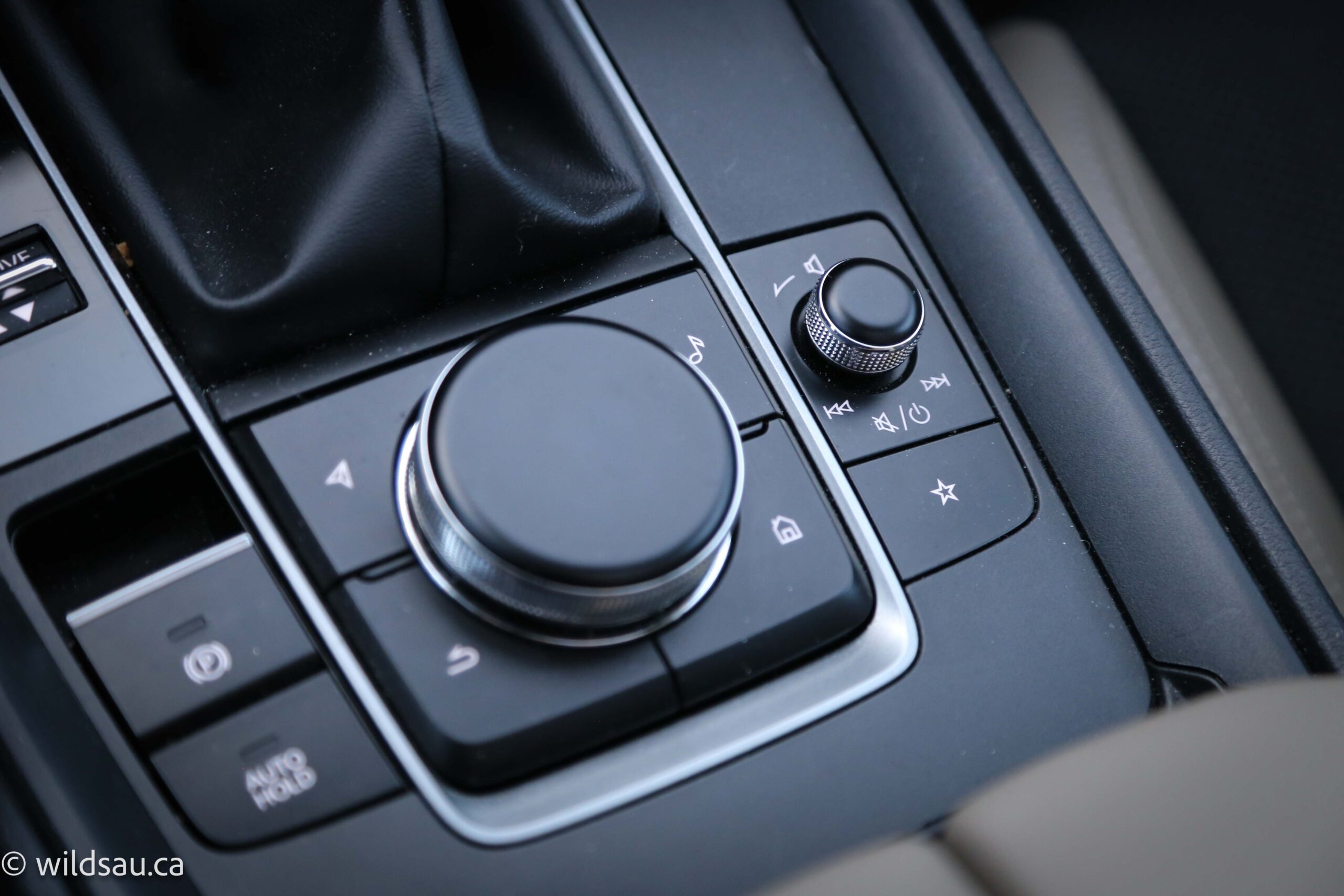
The infotainment system operates through a rotary controller located in the center console, reducing the need to reach toward the display screen while driving. Voice command functionality supports hands-free operation of audio, navigation, and communication features.
Standard safety equipment includes Mazda’s i-Activsense suite, incorporating adaptive cruise control, lane departure warning, blind spot monitoring, and automatic emergency braking. The system includes pedestrian detection and works effectively in Canadian urban environments.
Rear Seats
The rear seating area accommodates two passengers comfortably, with a center position available for occasional use. Rear legroom measures adequate for adults up to average height, though taller passengers may find the space a bit restrictive on longer journeys. The rear bench features a 60/40 split-folding design with levers located in the cargo area for easy access when loading larger items – I found this very convenient. Rear seat cushions offer reasonable comfort with supportive bolstering that prevents excessive lateral movement during cornering.
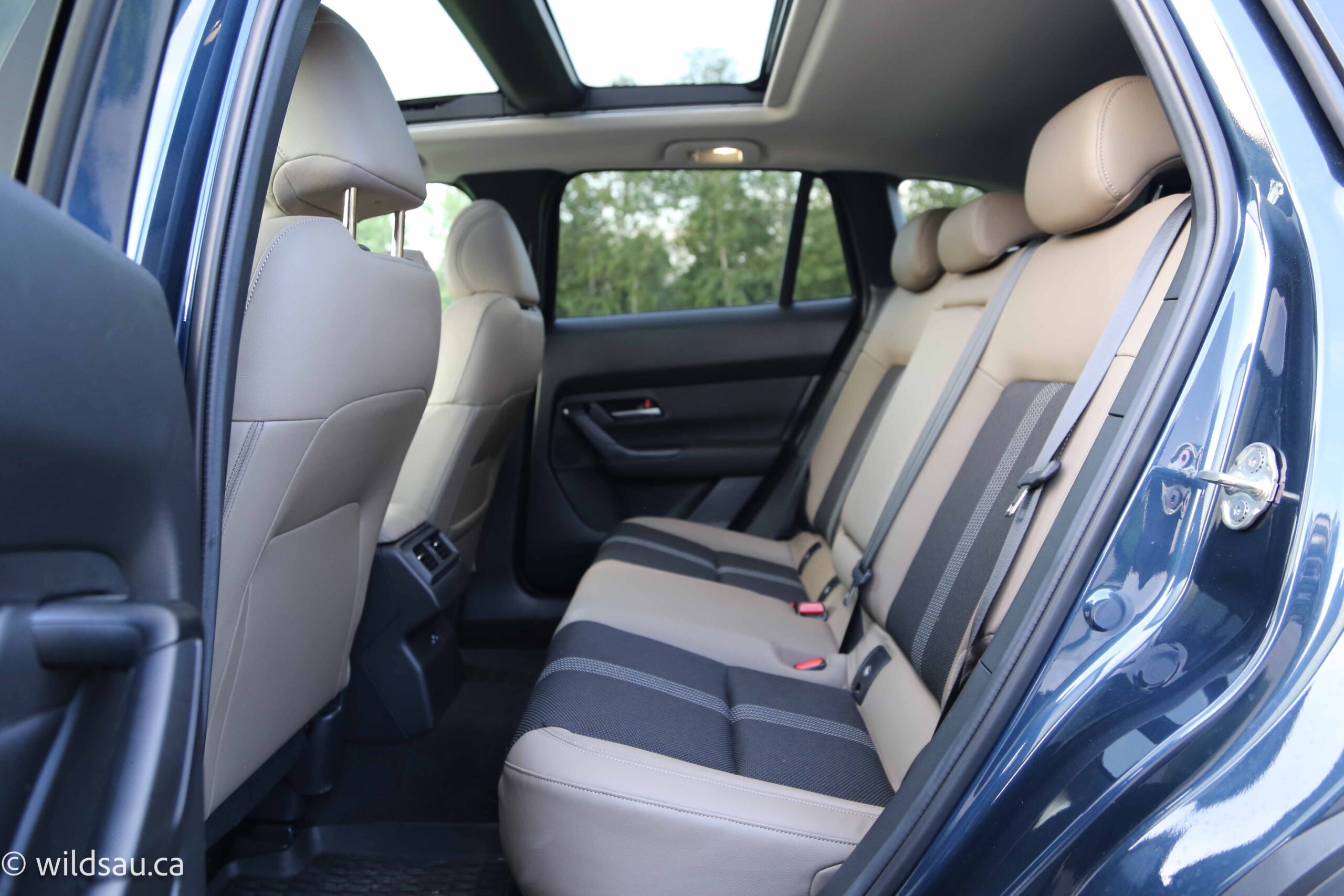
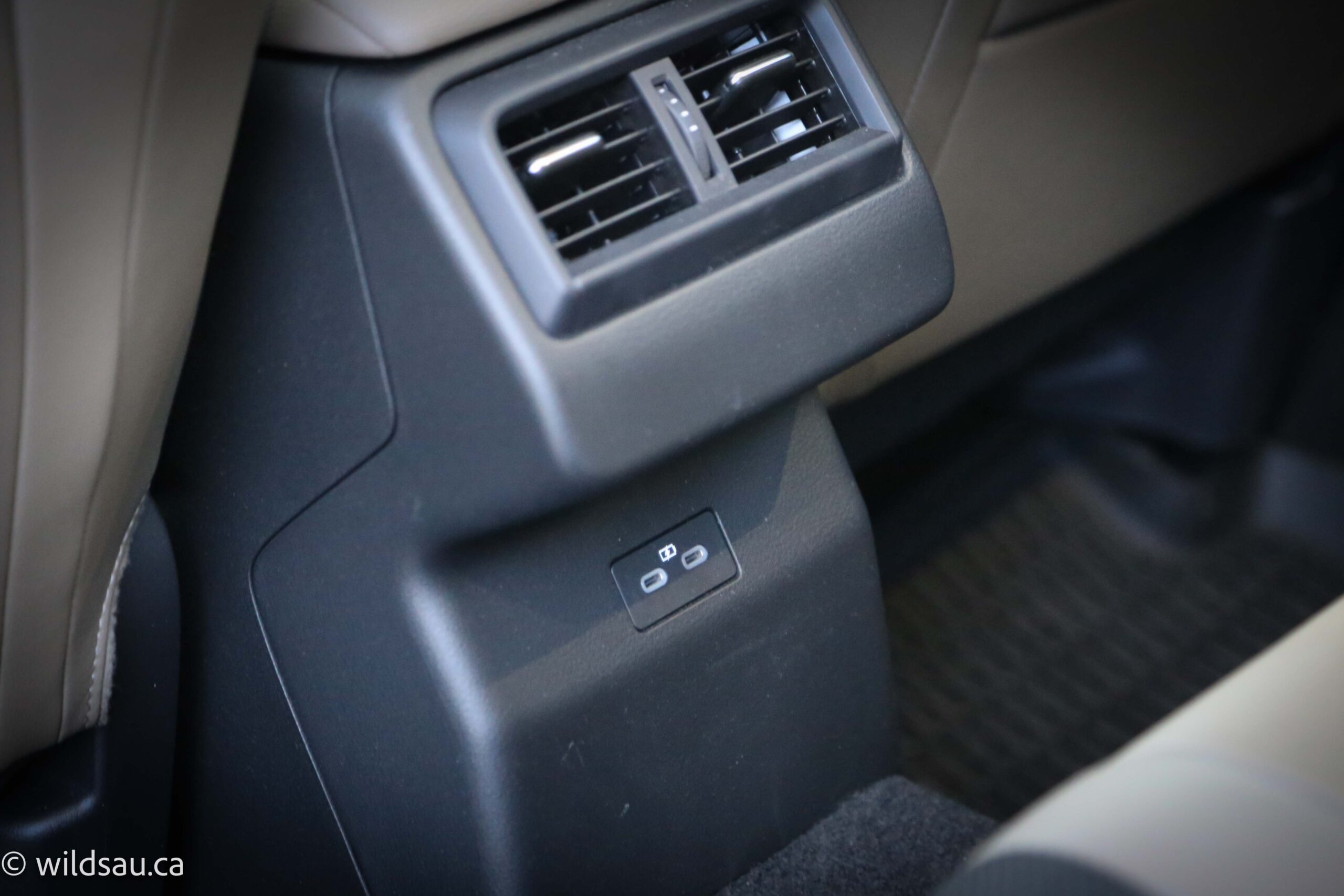
Rear passengers benefit from dedicated air vents positioned in the rear of the center console, providing independent airflow control. The rear door panels include storage pockets sized for water bottles and small personal items. Rear window area provides good outward visibility, though the rising beltline and sloping roofline create a more cocooned feeling compared to boxier SUV designs.
Storage
Interior storage solutions include multiple cupholders, door pockets, and a center console compartment. The GS-L includes wireless charging capability for compatible smartphones, positioned in the center console.
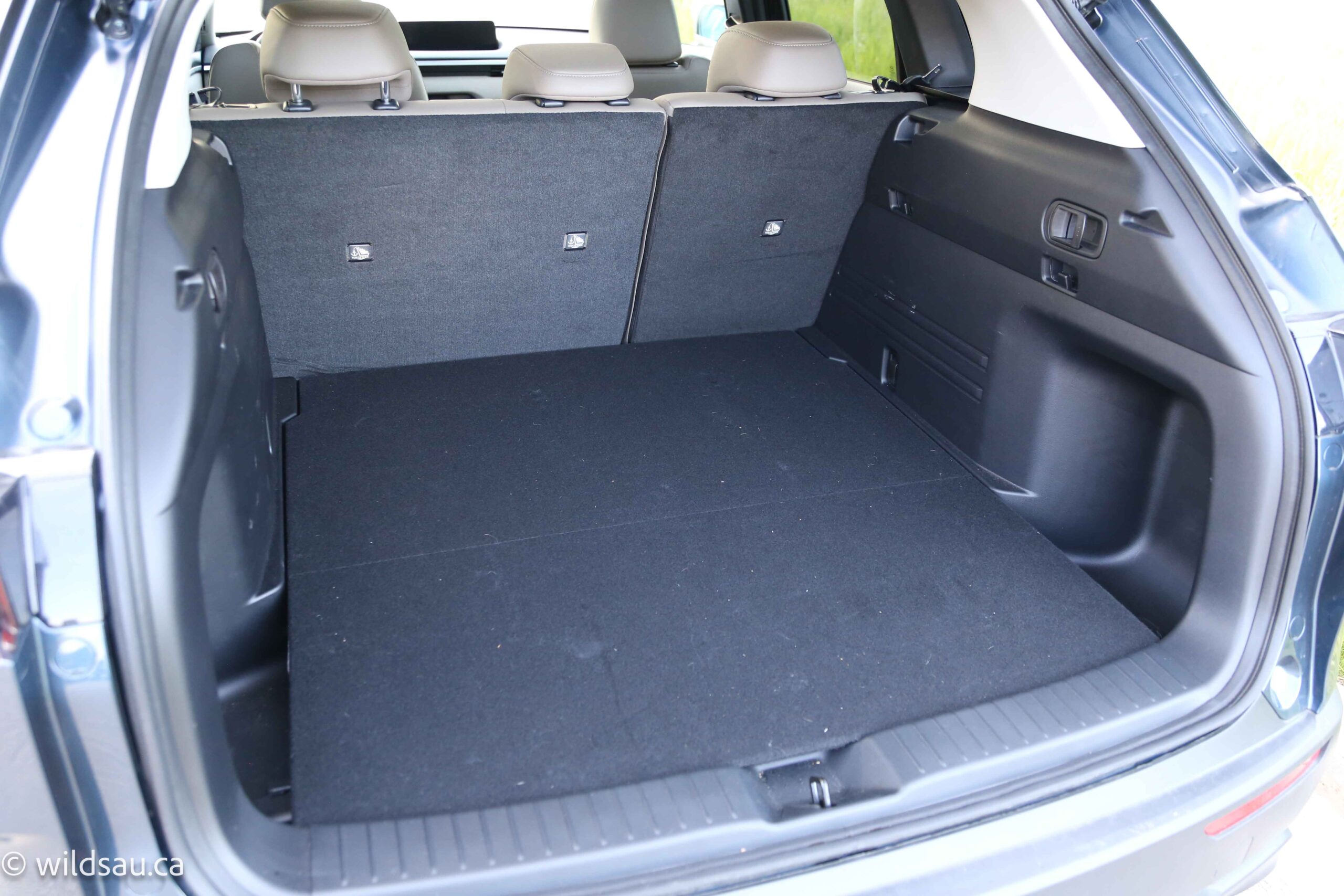
The CX-50’s cargo area provides 889 litres of space behind the second row and 1,595 litres with the 60/40-split rear seats folded down. While these figures place it near the bottom of the compact crossover class in terms of overall volume, the cargo area’s shape proves more practical than these numbers suggest.
The cargo floor is designed deeper than it is wide, optimized to fit coolers, packs, and gear lengthwise. This configuration better accommodates longer items like camping equipment, sports gear, and outdoor recreational equipment and in my opinion aligns the CX-50 with its adventure-oriented marketing.
The rear power liftgate comes standard on the GS-L, featuring programmable height adjustment to prevent contact with low garage ceilings or overhead obstacles. The loading floor sits at a reasonable height for loading heavier items without excessive lifting.
Under the Hood
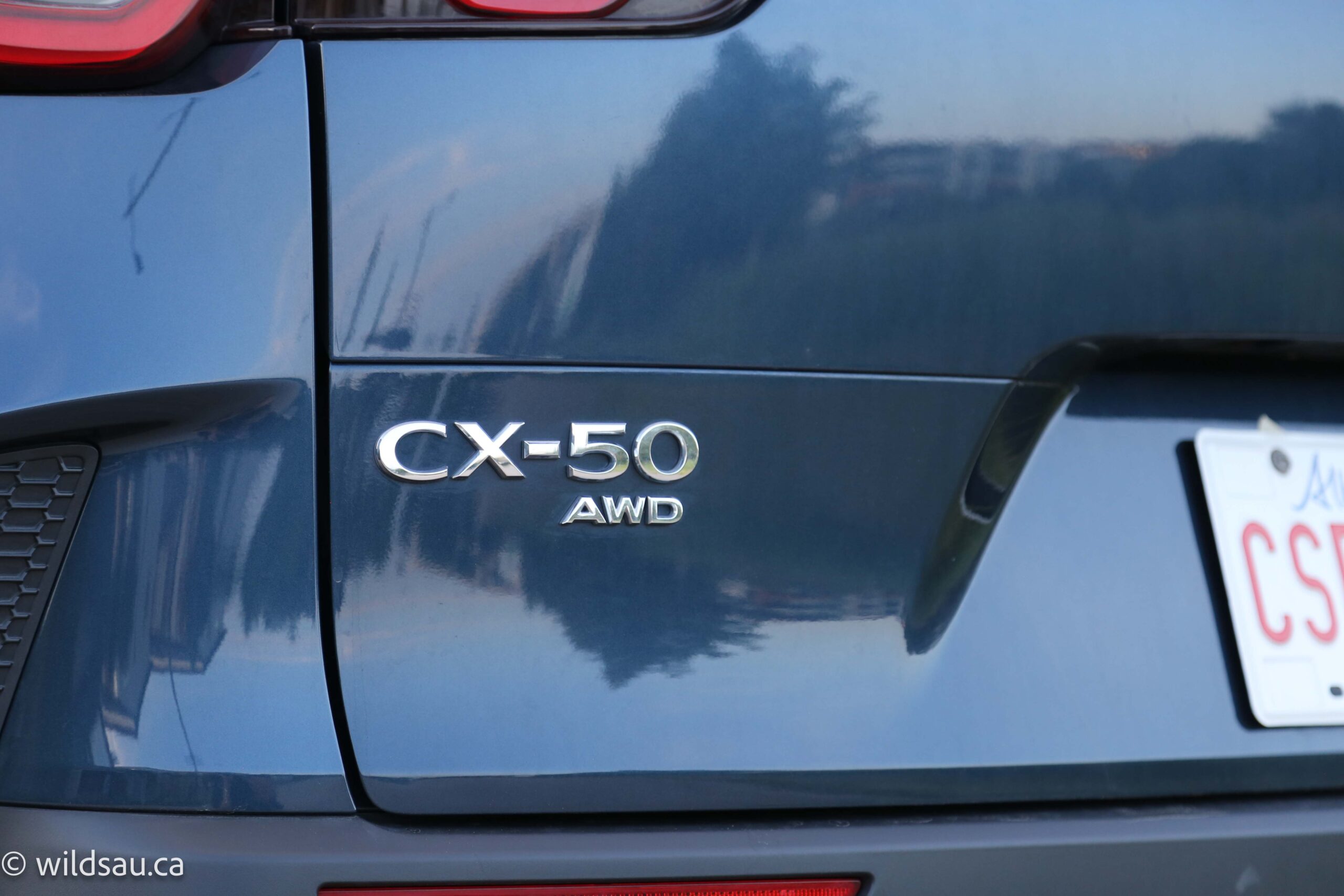
The GS-L is powered by Mazda’s naturally aspirated 2.5-litre Skyactiv-G four-cylinder engine, producing 187 horsepower and 185 lb-ft of torque. Power is transmitted through a six-speed automatic transmission to Mazda’s i-Activ all-wheel-drive system, which comes standard across all CX-50 trim levels.
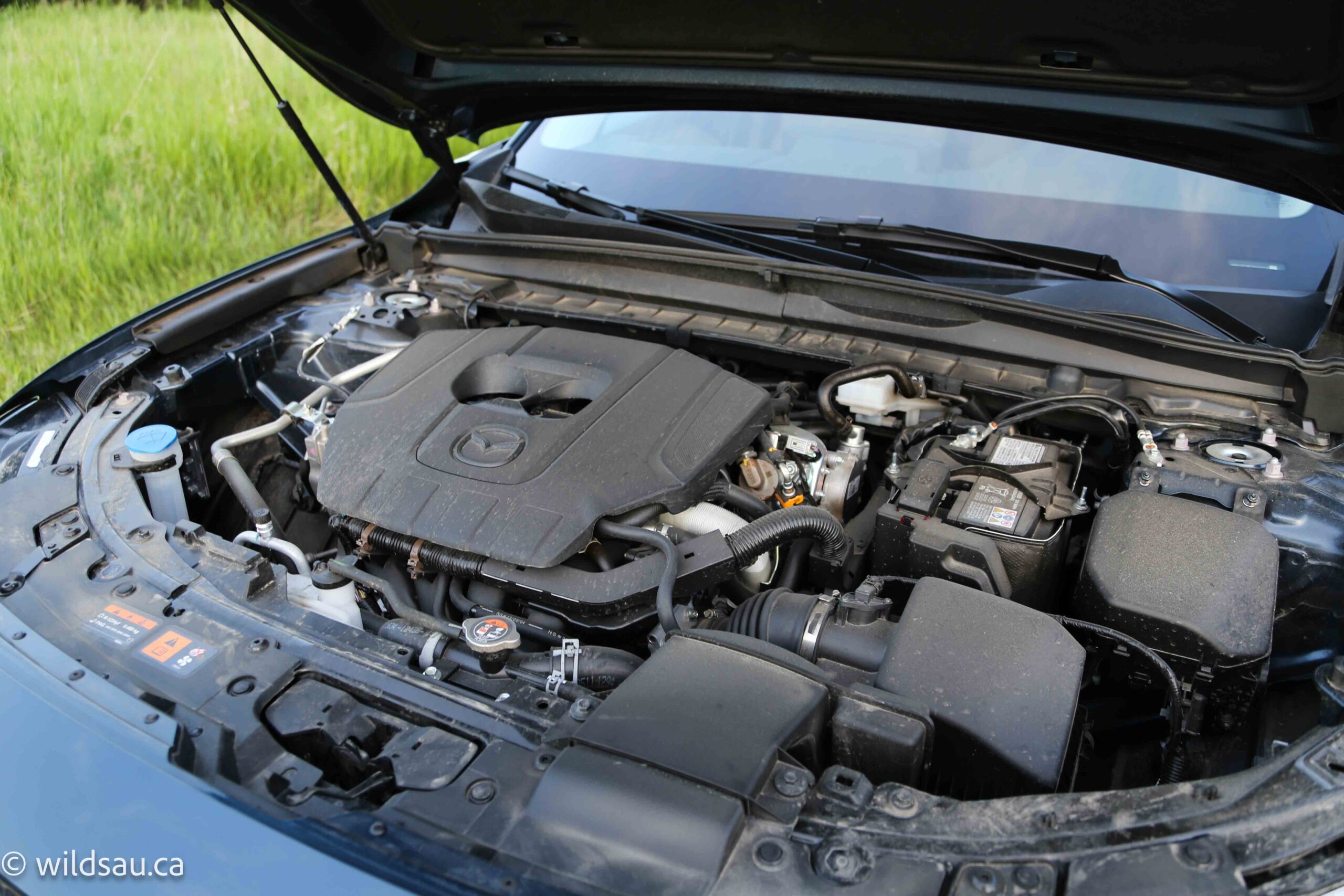
The i-Activ AWD system represents one of Mazda’s technological strengths, utilizing predictive logic to distribute power between axles before wheel slip occurs. This system monitors factors including steering angle, throttle position, and weather conditions through various sensors, making it particularly effective in winter conditions.
Fuel consumption ratings for the naturally aspirated 2.5-litre engine are 9.8L/100km city and 7.8L/100km highway according to Natural Resources Canada’s 5-cycle testing method. These figures position the CX-50 GS-L as reasonably efficient within the compact SUV segment, though not class-leading. The cylinder deactivation system contributes to improved highway efficiency by operating on two cylinders during steady-state cruising.
Real-world fuel consumption will vary significantly based on driving conditions, seasonal factors and individual driving habits. The all-wheel-drive system adds some efficiency penalty compared to front-wheel-drive alternatives, but this trade-off provides enhanced traction capability.
The Drive
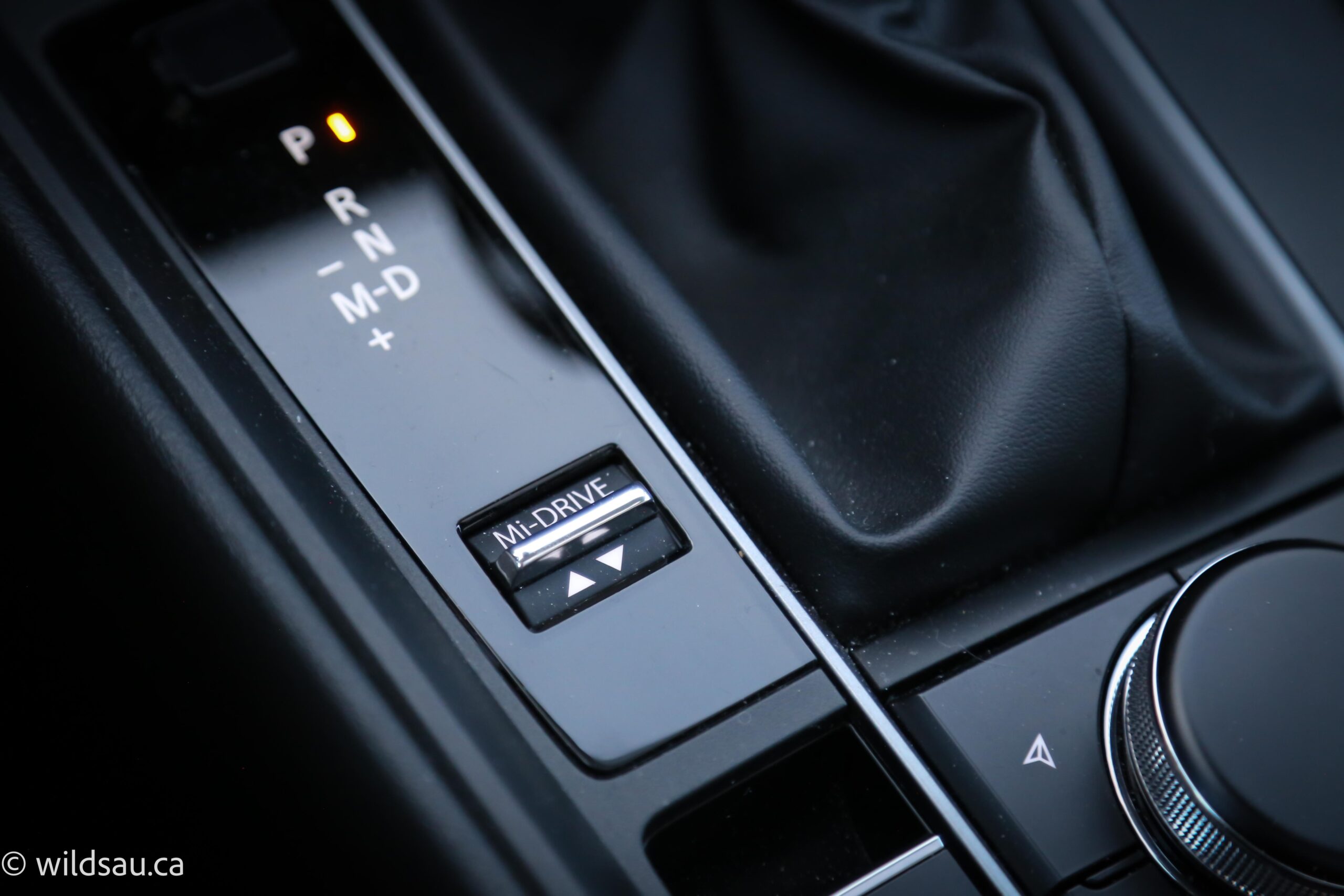
The powertrain provides adequate performance for daily driving scenarios, though it lacks the urgency of turbocharged competitors including Mazda’s own turbo option. The engine delivers its power smoothly across the rev range, with reasonable responsiveness for highway merging and city driving. The six-speed automatic transmission shifts predictably, prioritizing smoothness over quick gear changes. While not the most powerful in its class, the combination proves sufficient for most driving demands.
The CX-50 prioritizes driving engagement over isolation, maintaining Mazda’s philosophy of driver connection. The chassis provides communicative steering and handling characteristics that are rare in the compact crossover class. The suspension system balances ride comfort with body control, though it tends toward firmer damping compared to some competitors.
Road feel remains present through the steering wheel, providing feedback about surface conditions and tire grip levels. This characteristic appeals greatly to me, and will to other driving enthusiasts, but could feel less refined to passengers prioritizing comfort above engagement.
The elevated seating position provides good forward visibility, though thick A-pillars can create blind spots during turns. Ground clearance measures higher than typical crossovers, supporting the model’s light off-road capabilities.
The “Rugged” Part
While Mazda makes sure we know the CX-50 is the rugged family member, and it does get a dedicated off-road driving mode, higher ground clearance (8.6 inches vs. the CS-5’s 7.6 inches) and tougher aesthetics. In its defense, perhaps the cx50 is a little better for off-road adventures given better departure and approach angles and yes, maybe gravel or dirt roads or that rocky rutted path to get to a picnic site will be handled fine, but let’s get real here – its suspension is not anywhere near robust enough for any actual off-roading and the likelihood of anyone doing anything beyond bouncing around a few feet off the beaten path is about the most this CX-50 will (and should) see.
Speaking of outdoorsy stuff, it has a relatively paltry towing capacity of 2000 pounds.
The Verdict
WAF (Wife Approval Factor) was high – she loved the high driving position and how everything felt rock solid.
The CX-50 GS-L comes in at under $43,000 before taxes, positioning it competitively within the compact SUV segment. This pricing includes standard all-wheel drive, which often costs extra on competing models.
The GS-L provides essential features without excessive complexity, appealing to buyers prioritizing capability over luxury amenities. The standard AWD system and rugged design elements differentiate it from more road-focused alternatives, though cargo space limitations may concern families requiring maximum utility.
The 2025 Mazda CX-50 GS-L delivers a competent package for buyers seeking a compact SUV with standard all-wheel drive and adventure-ready capabilities. While not the most spacious or powerful option available, it offers engaging driving dynamics, solid build quality, and practical features at a reasonable price point. The model succeeds in carving out a distinct identity within Mazda’s SUV lineup, appealing to active individuals and families who value capability and character over maximum utility.
Disclosure: Vehicle was provided by Mazda Canada.
If you enjoyed this review, feel free to check out my other vehicle reviews under the car reviews tab at the top of my blog.