A few minor tweaks, it seems, and now we have a winner!
Review and photos by Tom Sedens. There are always more photos at the end of my reviews.
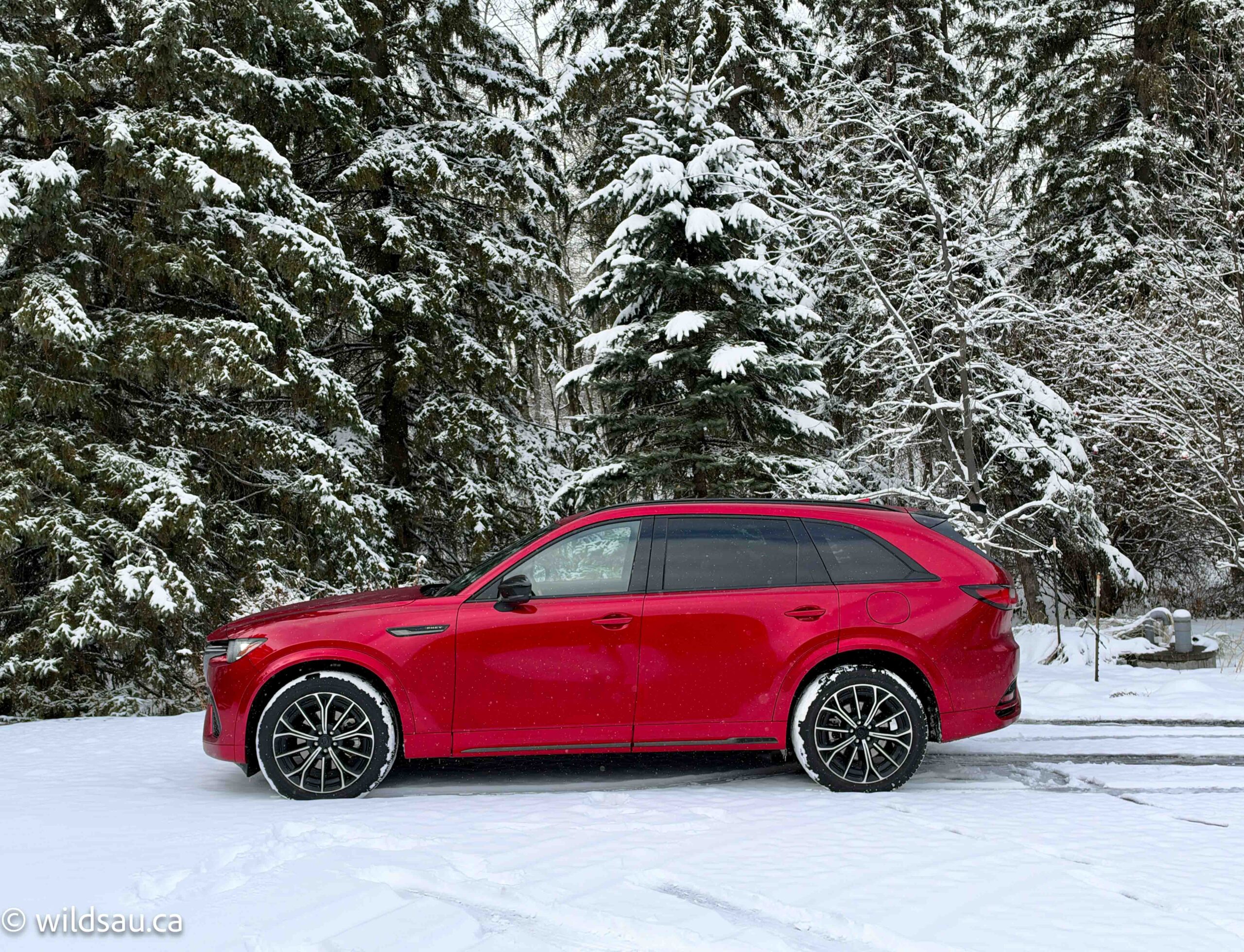
Mazda’s biggest SUVs, the CX-90 and the CX-70, are basically the same vehicle with or without, respectively, the third row removed. Here we are reviewing the newest CX-70, a five-passenger SUV.
Pricing: 2026 Mazda CX-70 PHEV Signature
Base price: $68,300
Options: $500 Soul Red Crystal Metallic paint
Freight & PDE: $2,195
Price as tested: $70,995
Exterior
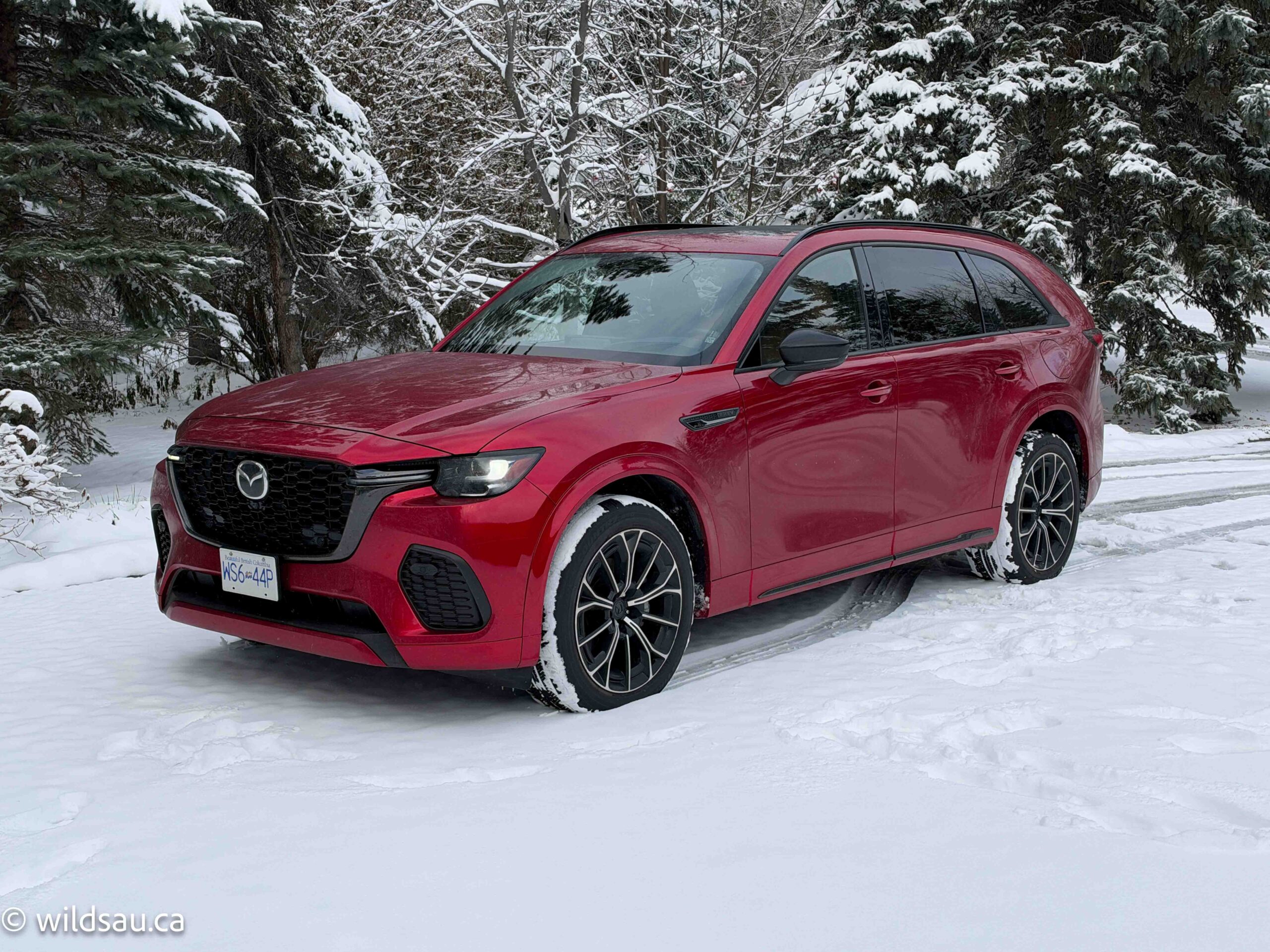
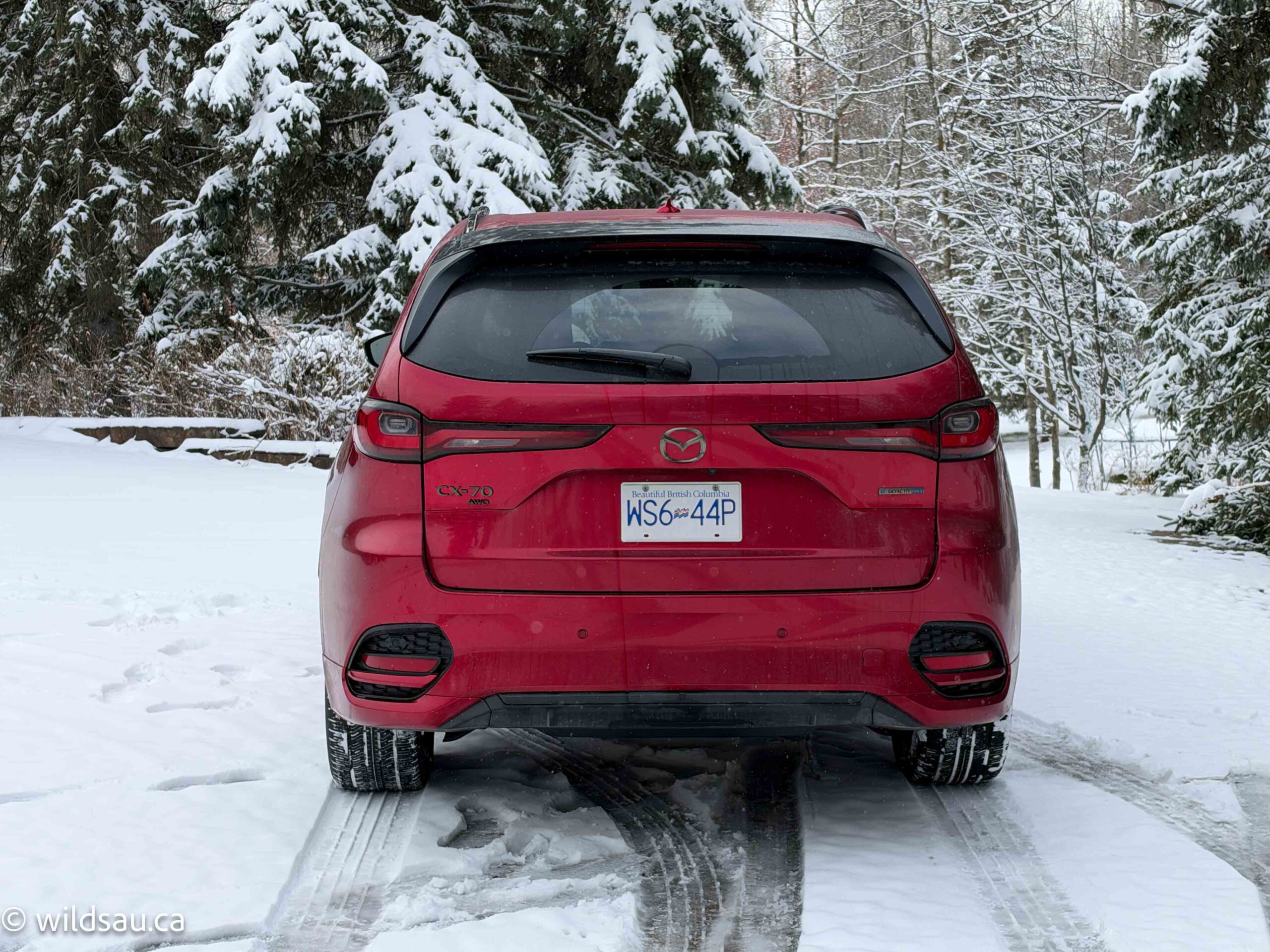
There is essentially nothing that distinguishes the CX-70 from the CX-90 from the outside, short of the badging. The overall styling is modern and luxurious, and the whole vehicle feels like it is carved out of one solid piece. Even after being out for a few years, it still gets a lot of attention.
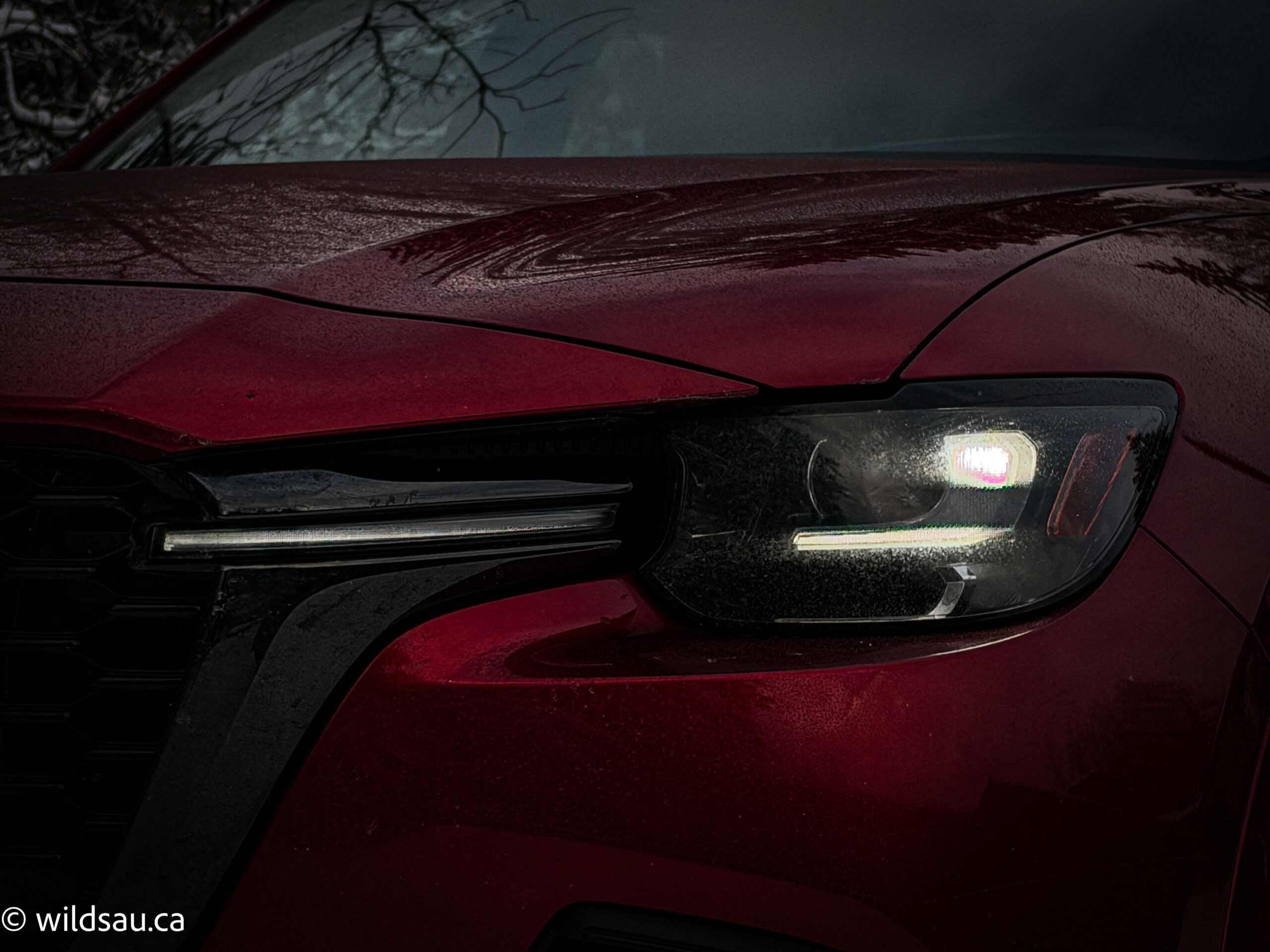
One of the first things you’ll notice on the CX-70 is the bold front end. It looks (and is!) wide and brings with it considerable presence when the vehicle is standing still or coming down the road toward you. Mazda’s split wing grille aesthetics look fantastic here.
I found the CX-70’s silhouette to be very rear-heavy. The short front overhang emphasizes the amount of vehicle behind the rear axle even more, and there’s a lot of it. For the sake of clarity, I’m a big fan of this profile.
All exterior lighting is LED – headlights, driving lights and tail lights.
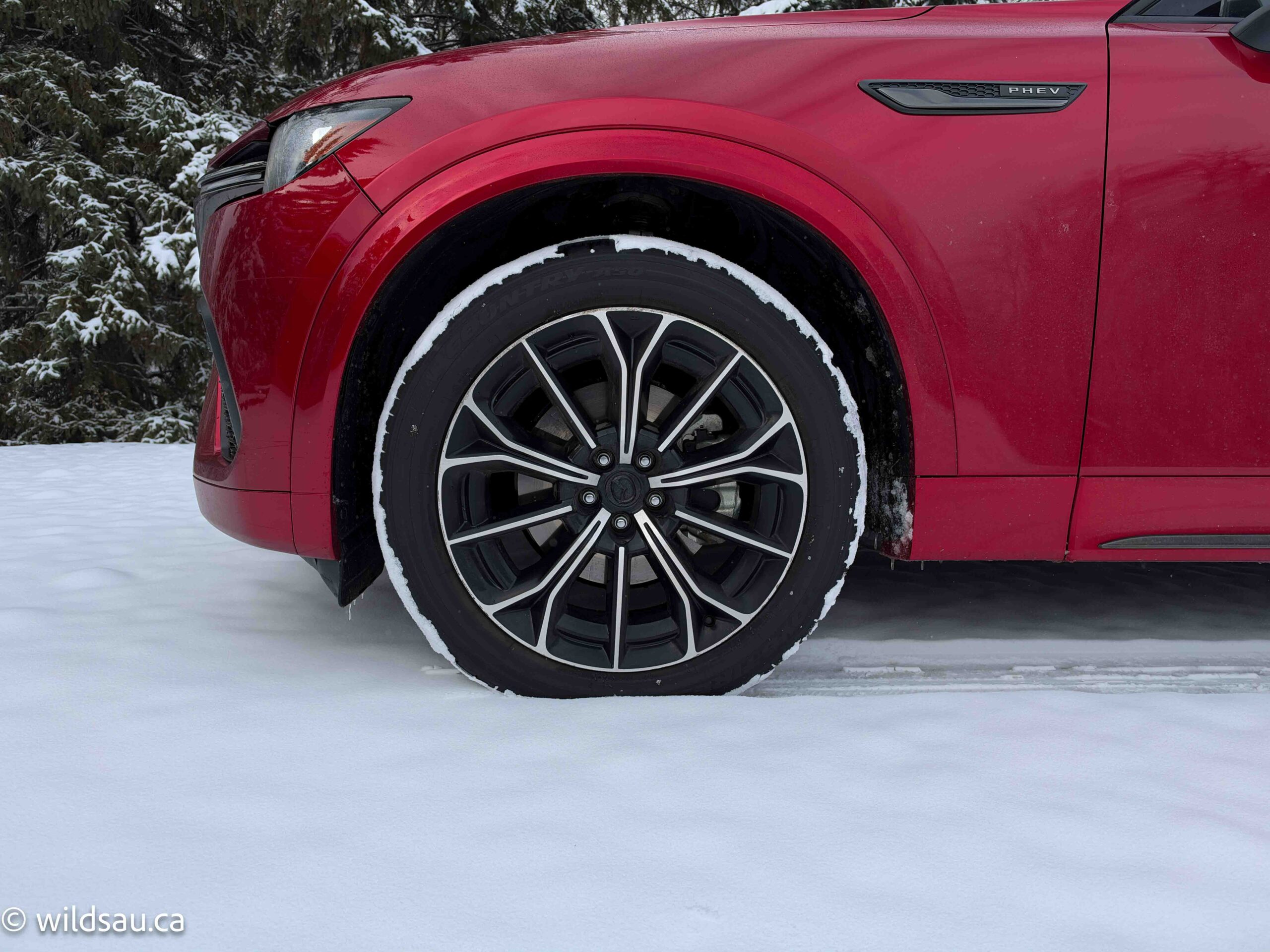
The Signature is the highest trim and therefore gets massive 21-inch rims with equally huge 275/45 tires. The Signature trim looks very upscale. There’s a black rocker panel accent at the bottom of the doors with “Mazda” debossed into it, which draws the eye.
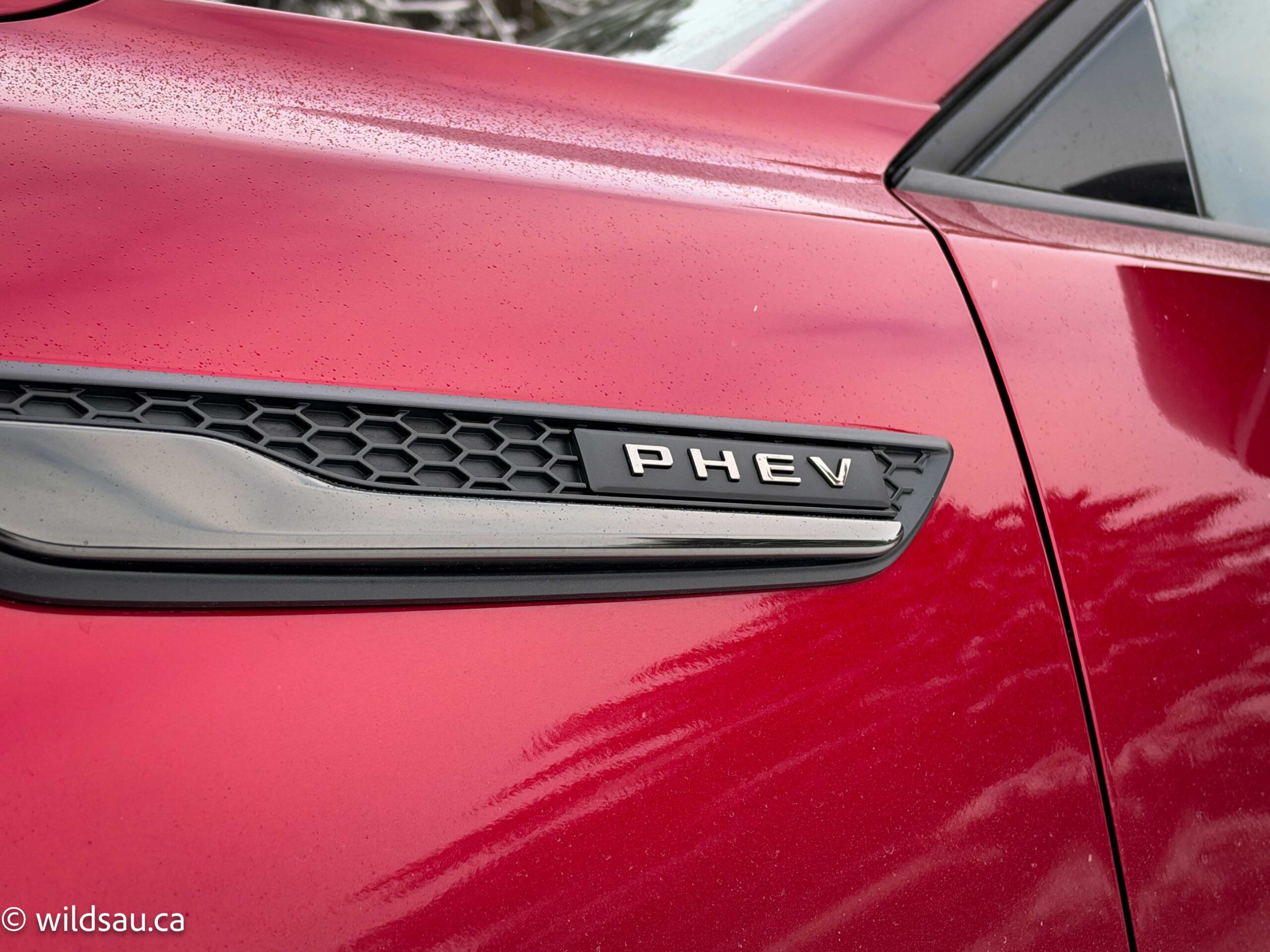
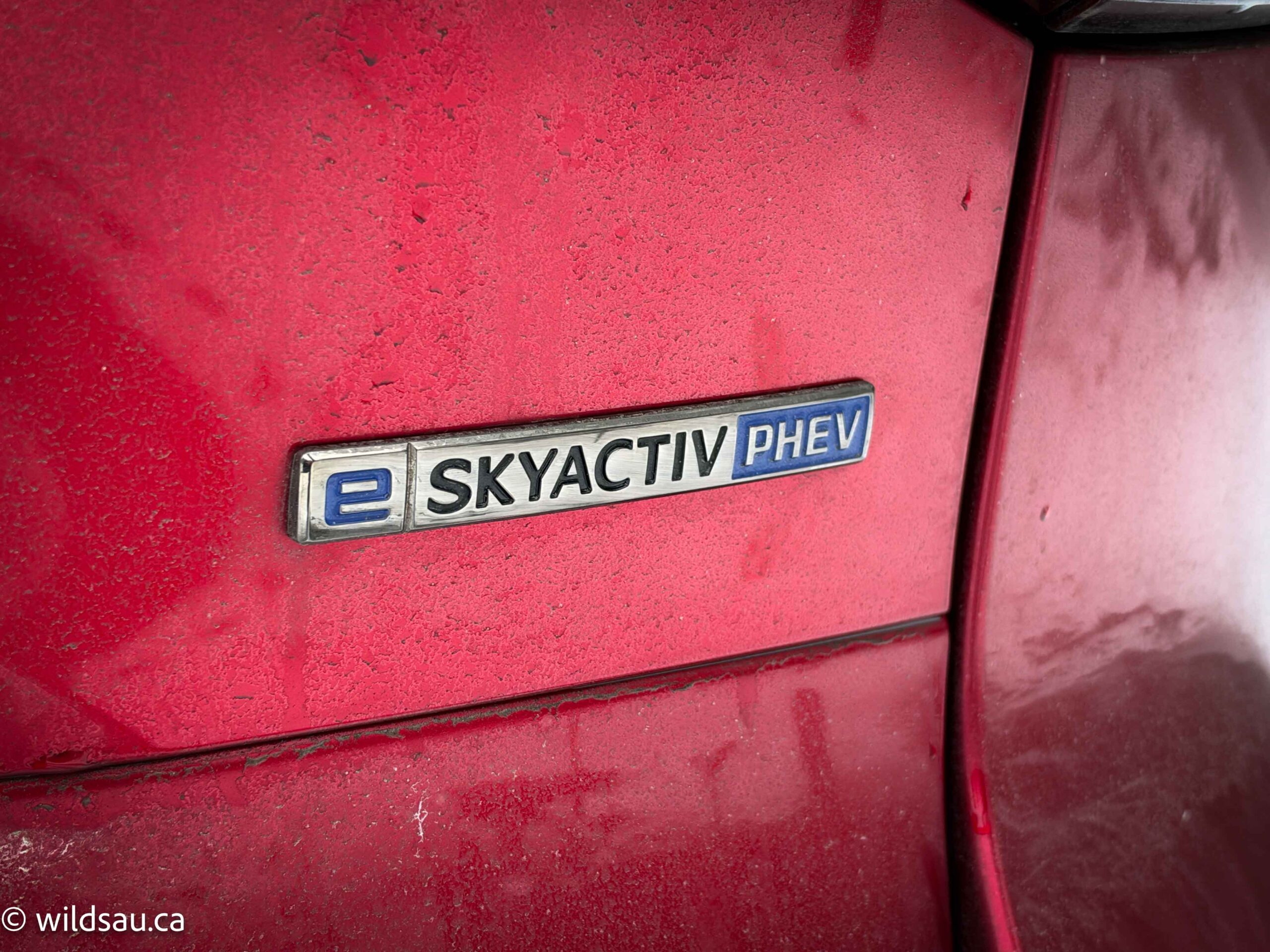
The PHEV gets its own black side badging, so there’s no mistaking what’s under the hood. I don’t mind this badging – there’s nothing wrong with advertising a PHEV these days. What I find weird is that the other power plant variant indicates “Inline-6” on that same badge, which I think is dumb. Would they advertise if it’s an inline-4 or V6 or anything else?
Interior/Tech/Convenience
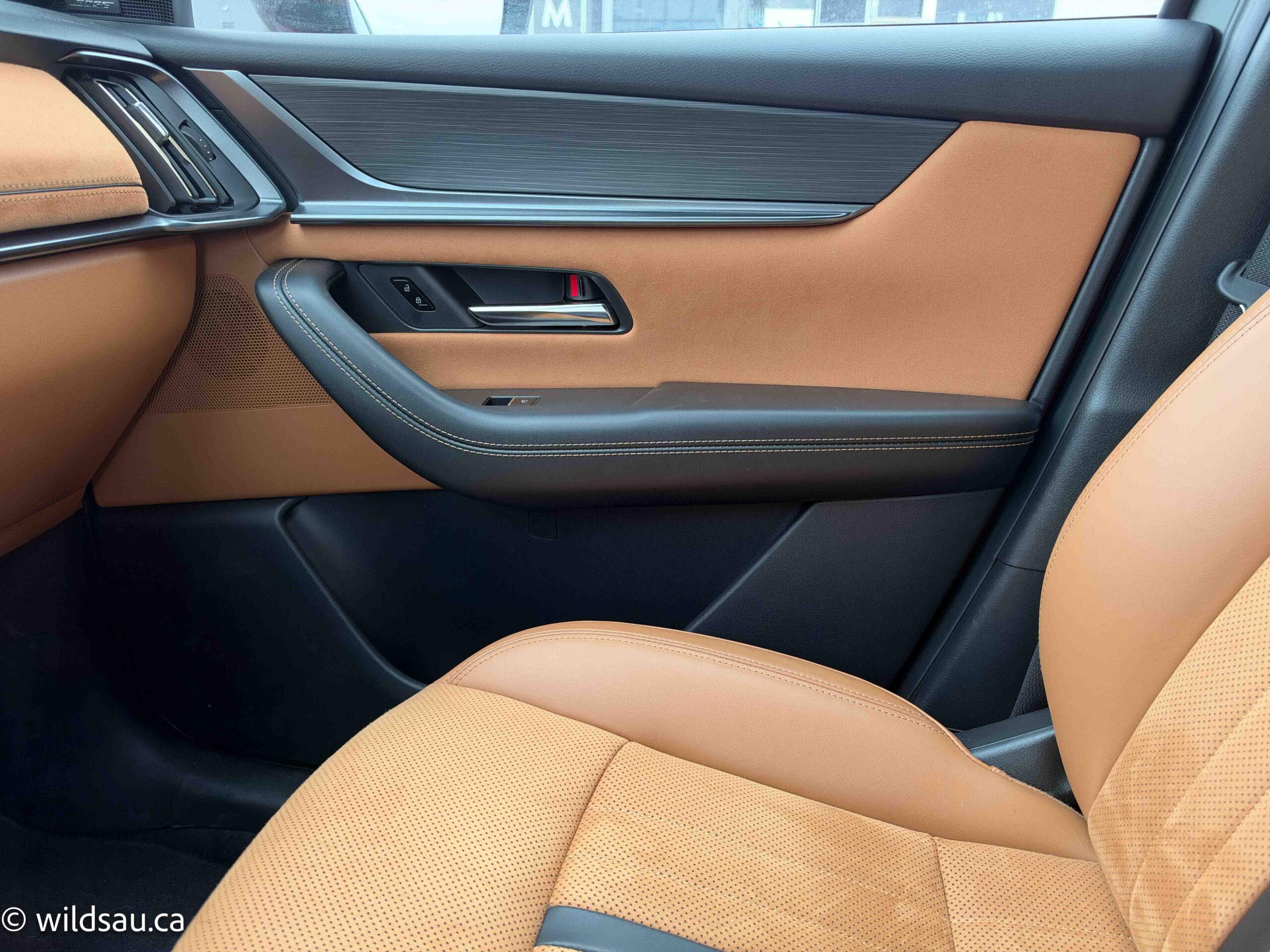
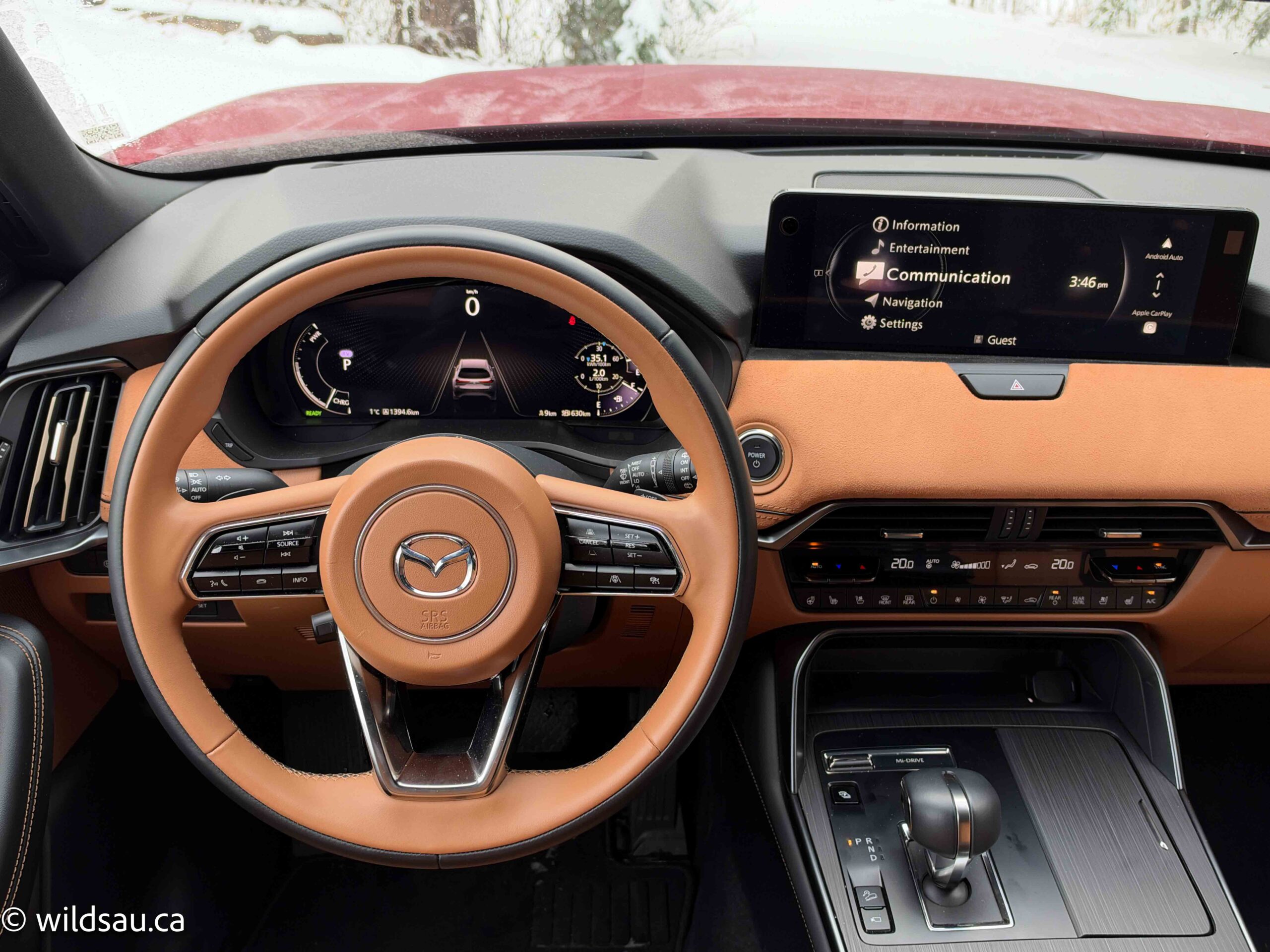
I’ve commented aplenty about high-end Mazda trims. The materials are nice. Really, really nice actually. There’s plenty of soft-touch plastics where they need to be, and in the Signature trim the dash and door trim are finished in Windsor Tan Grand Luxe Suede with attractive contrasting details.
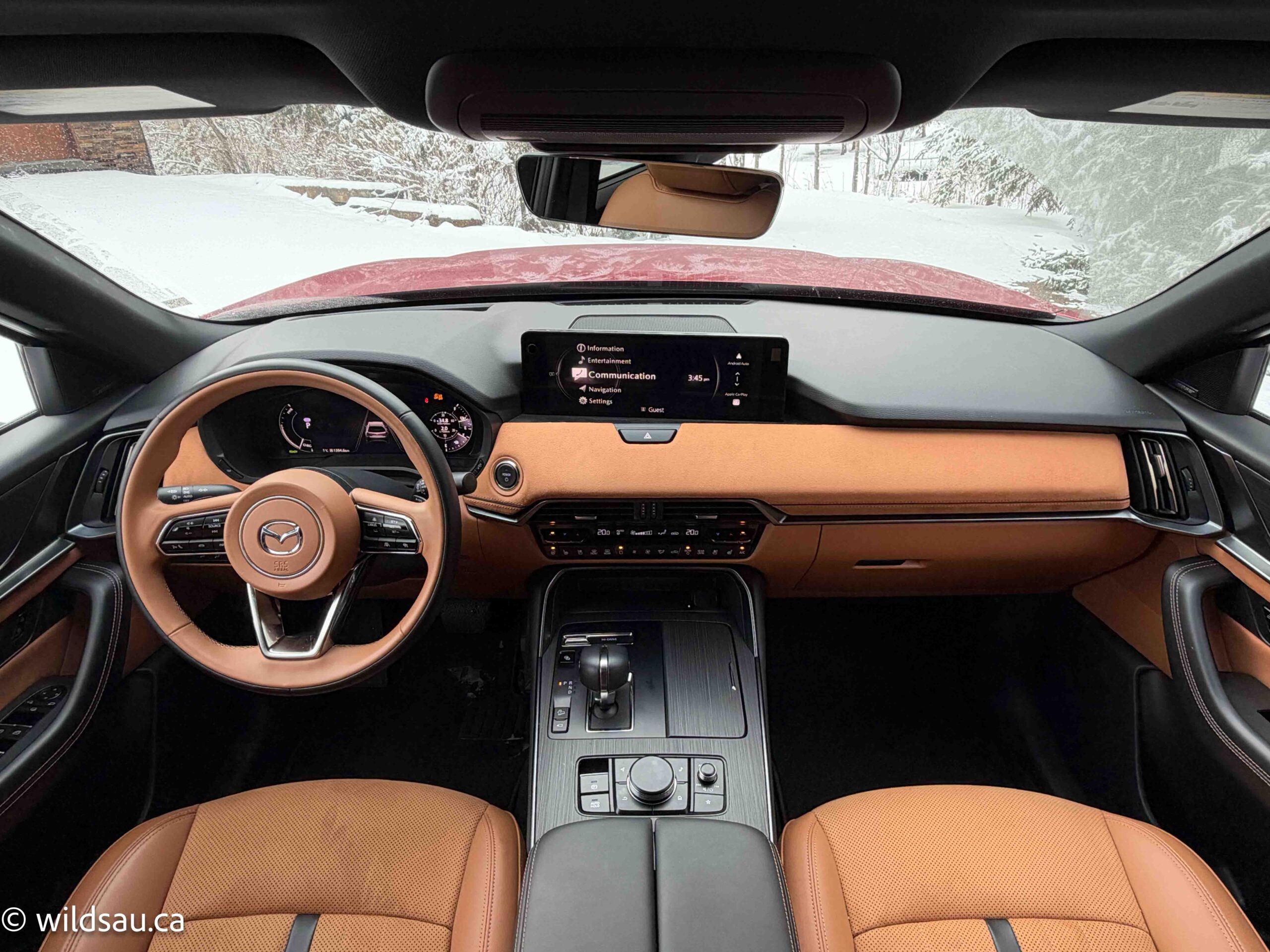
The CX-70 has a fantastic heated steering wheel. In the Signature, it’s two-tone, combining tan and black. Behind it is a configurable 12.3-inch digital dash.
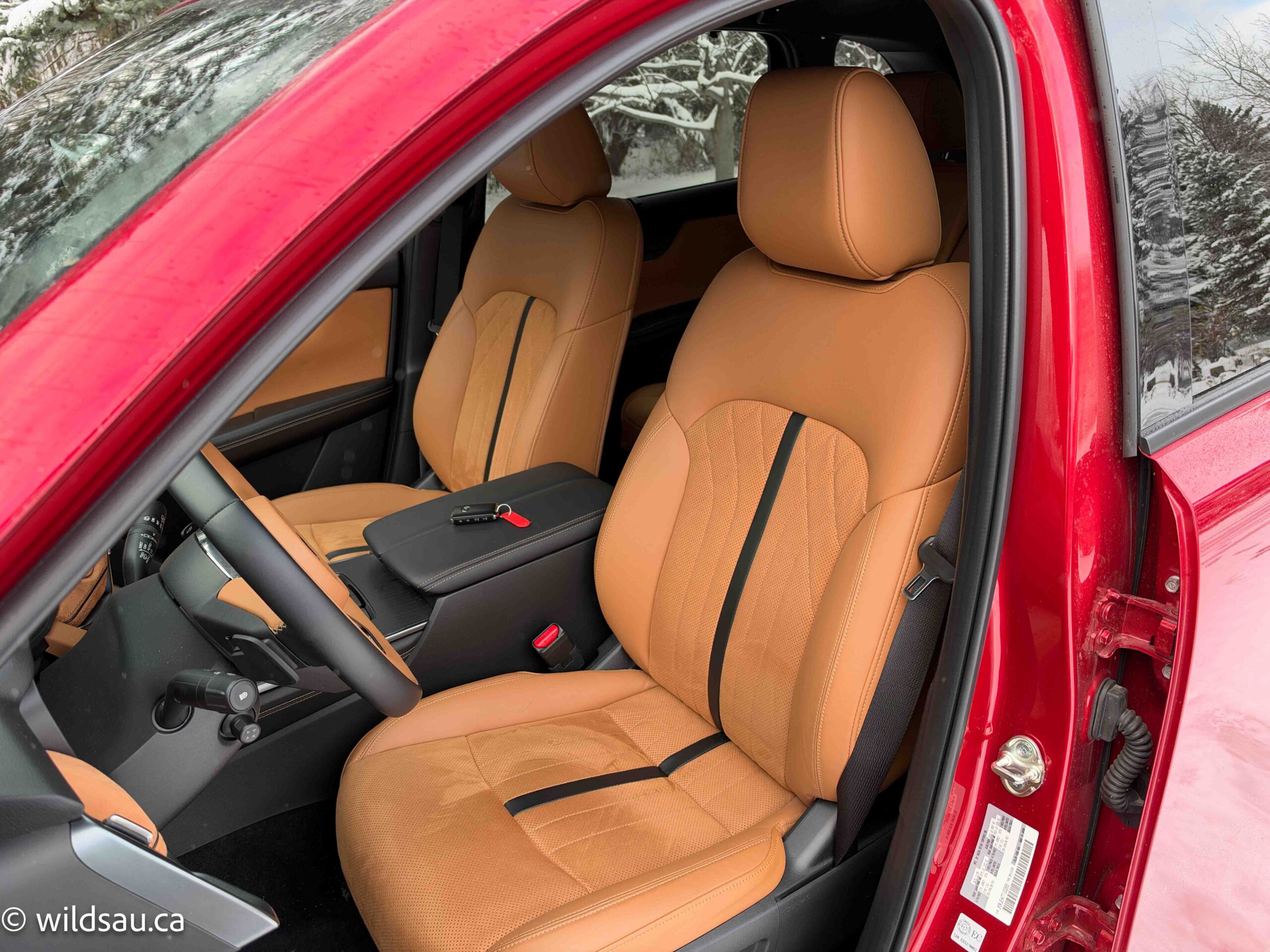
The seats are excellent. We found them to be very comfortable and reasonably well bolstered for support. They are upholstered in stunning perforated Nappa leather and are heated and ventilated. The seats have a thick black accent stripe and diamond quilting detail making them as nice to look at as they are to sit in.
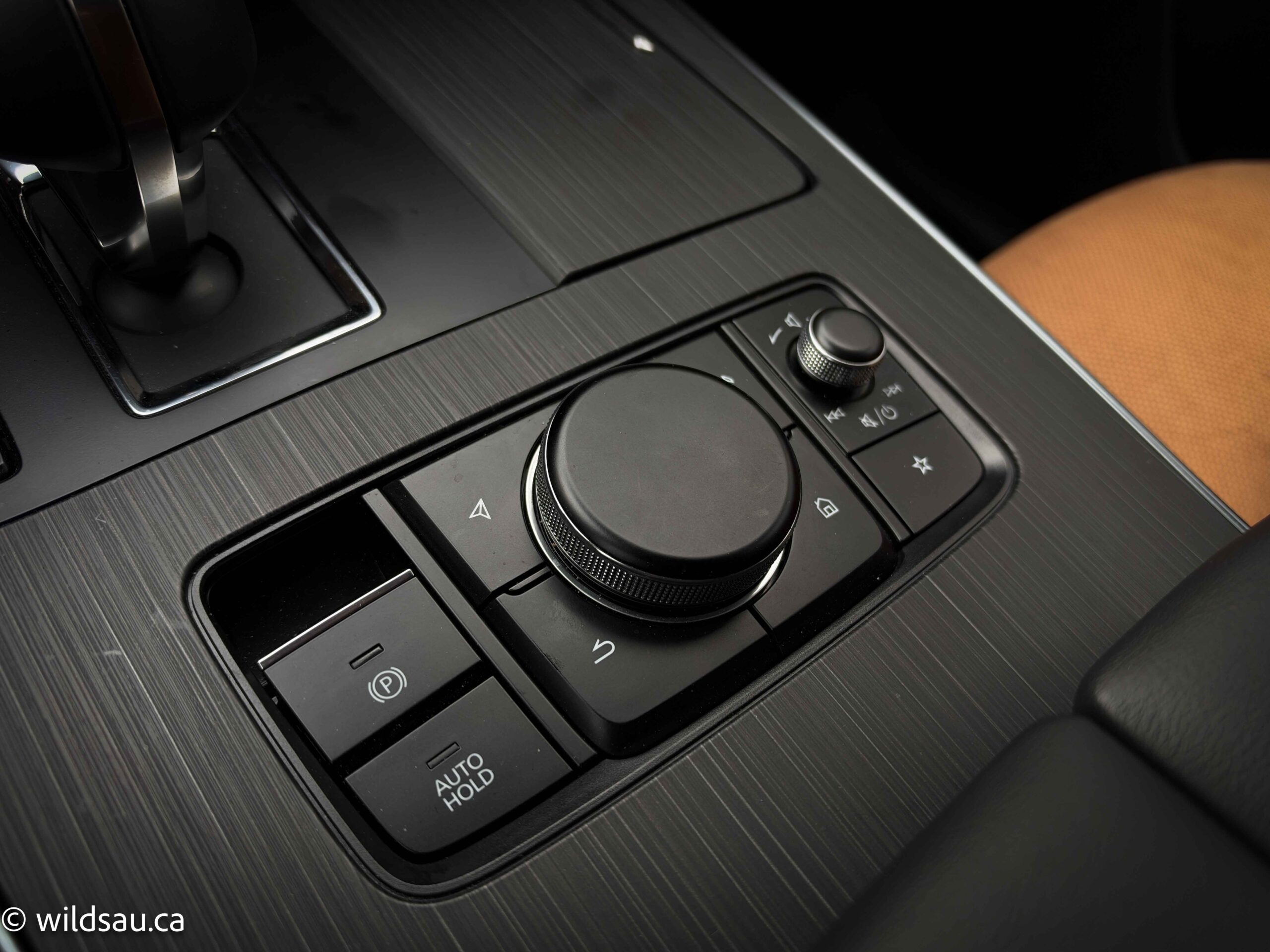
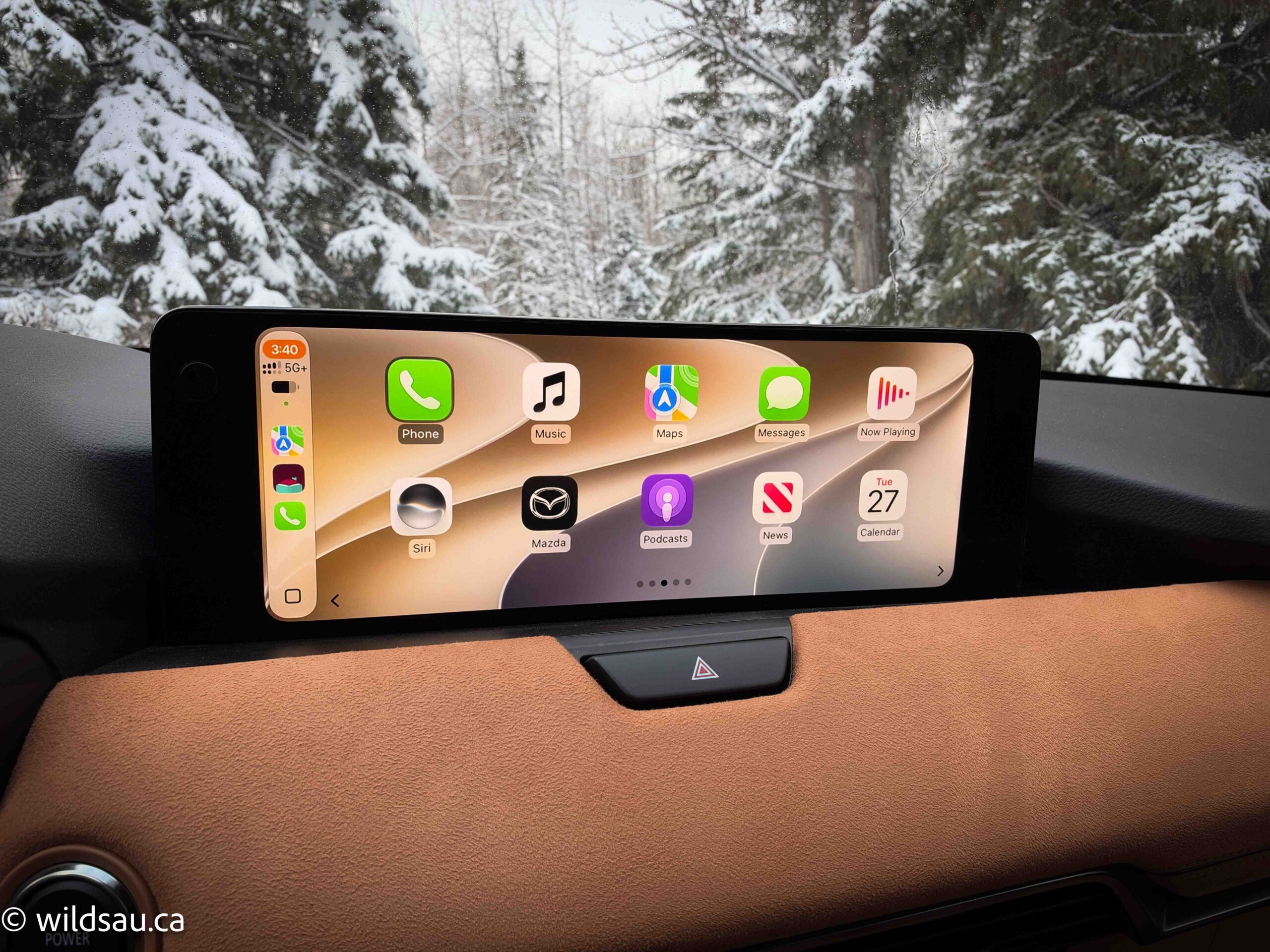
Centered on the dash is a 12.3-inch colour display running Mazda’s Connect infotainment system. The interface has improved, but Mazda’s approach to infotainment still requires some patience. There are times when you need to dig through layers of menus to accomplish relatively simple tasks, and the system can feel dated compared with some competitors.
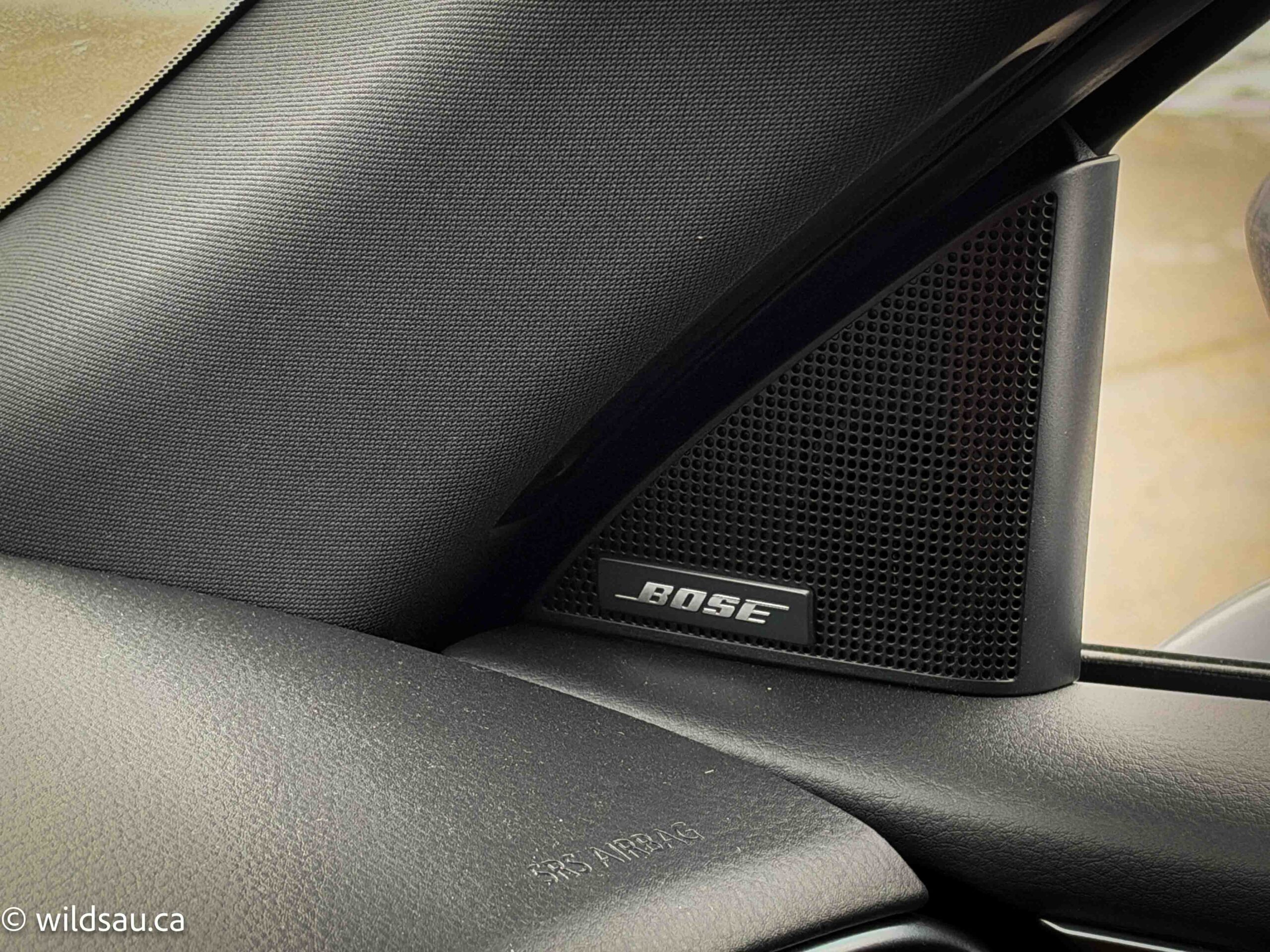
Wireless Apple CarPlay and Android Auto are included, along with an outstanding 12-speaker BOSE sound system.
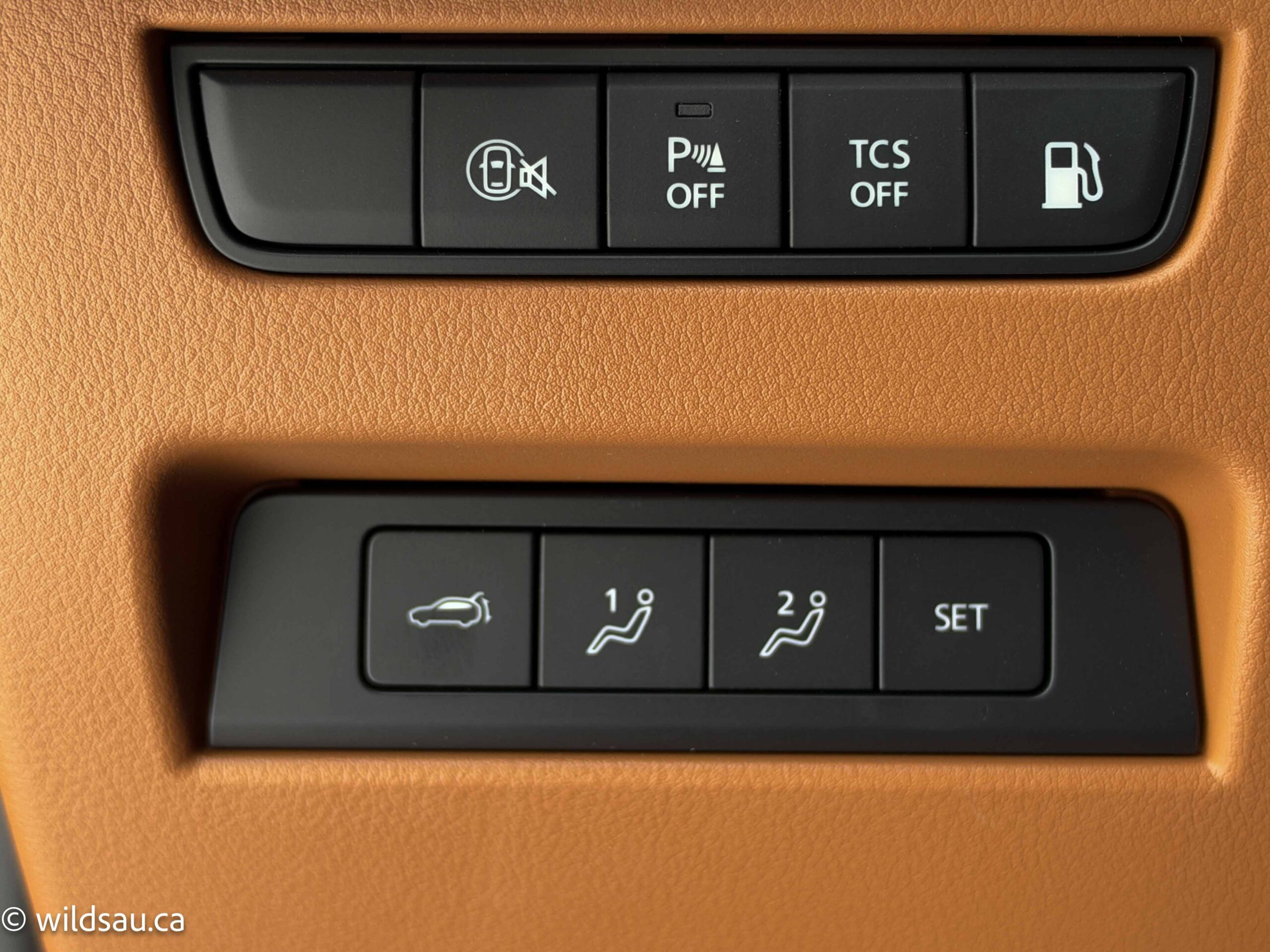
The Signature trim gets a boatload of modern driver assistance technology to keep everyone safe. This includes front and rear parking sensors, a 360-degree camera system, blind spot monitoring, adaptive cruise control, lane-keeping assistance, emergency lane keeping, rear pedestrian detection and a host of smart braking systems. There’s also a head-up display that projects useful information onto the windshield.
The interior of the Signature is really something else – truly a place of luxury.
Rear Seats
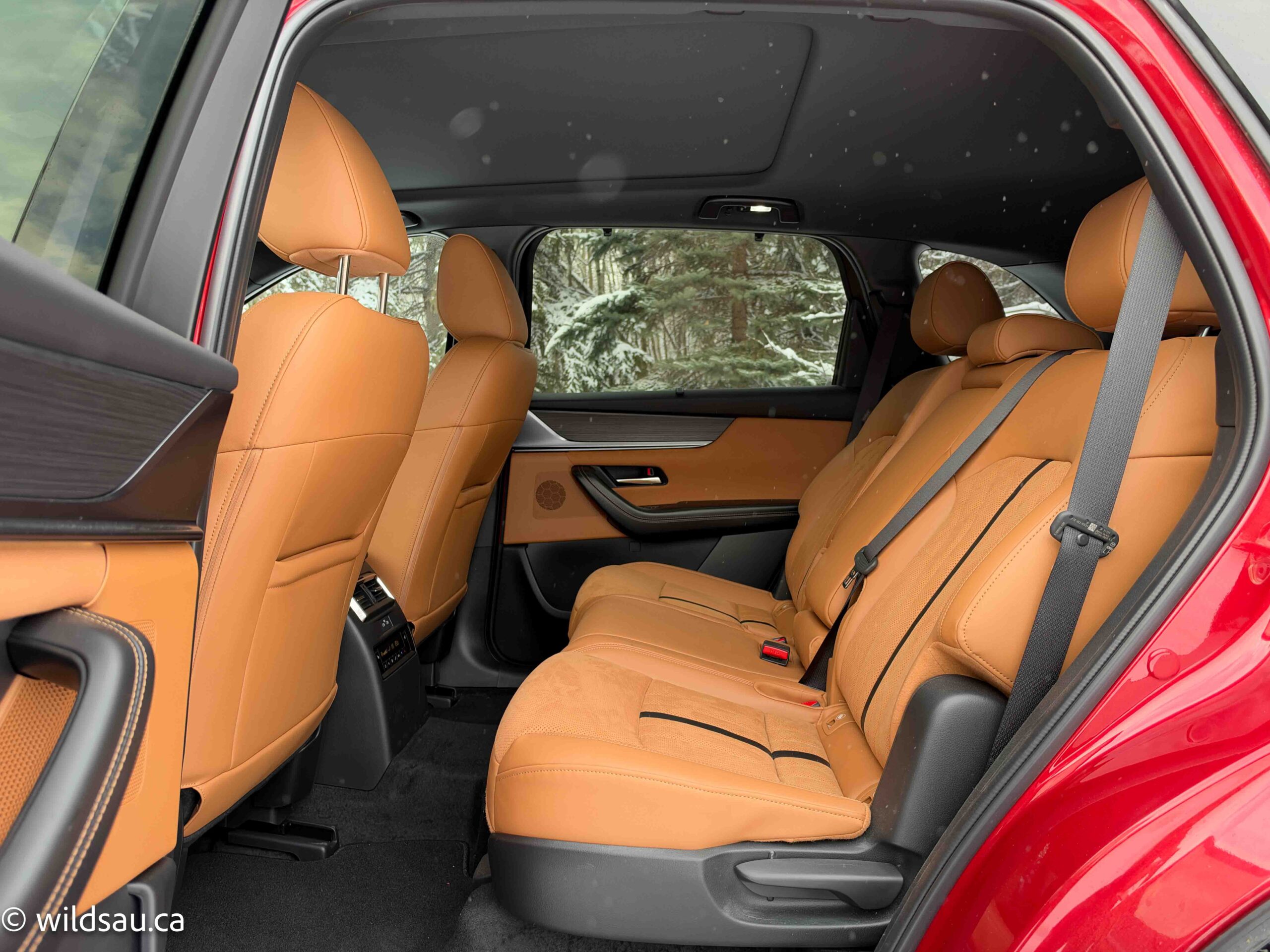
The second-row seats are very comfortable. I’m 5’10”, and sitting behind my own driving position, I had headroom to spare and about 6-7 inches of knee room. The seats are heated, recline and slide fore and aft.
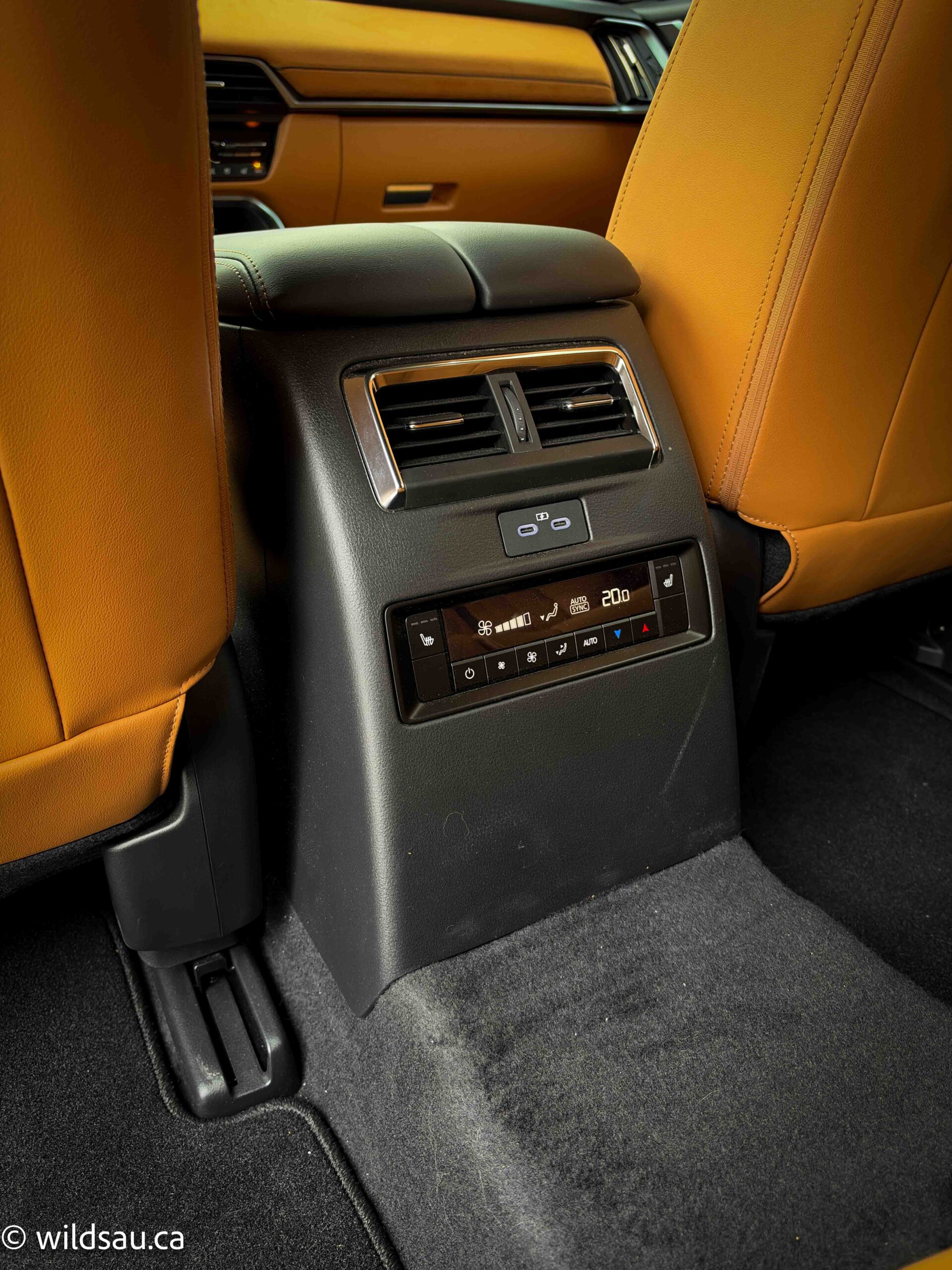
The rear of the centre console features two USB-C plugs, adjustable air vents and a separate climate control panel. Combine this with the huge panoramic sunroof overhead and the second row is a lovely place to be.
Of course, the CX-70 does away with the third row found in the CX-90. If you don’t need those extra seats, this is a sensible trade-off. You get a five-passenger SUV without having to accommodate a pair of occasionally useful but otherwise space-consuming and heavy seats in the back.
Storage
At the front of the centre console is a small rubberized wireless charging mat, oriented width-wise, as well as a 12V plug. You’ll find a shallow carpeted bin under the clamshell armrest lid where two USB plugs reside as well.
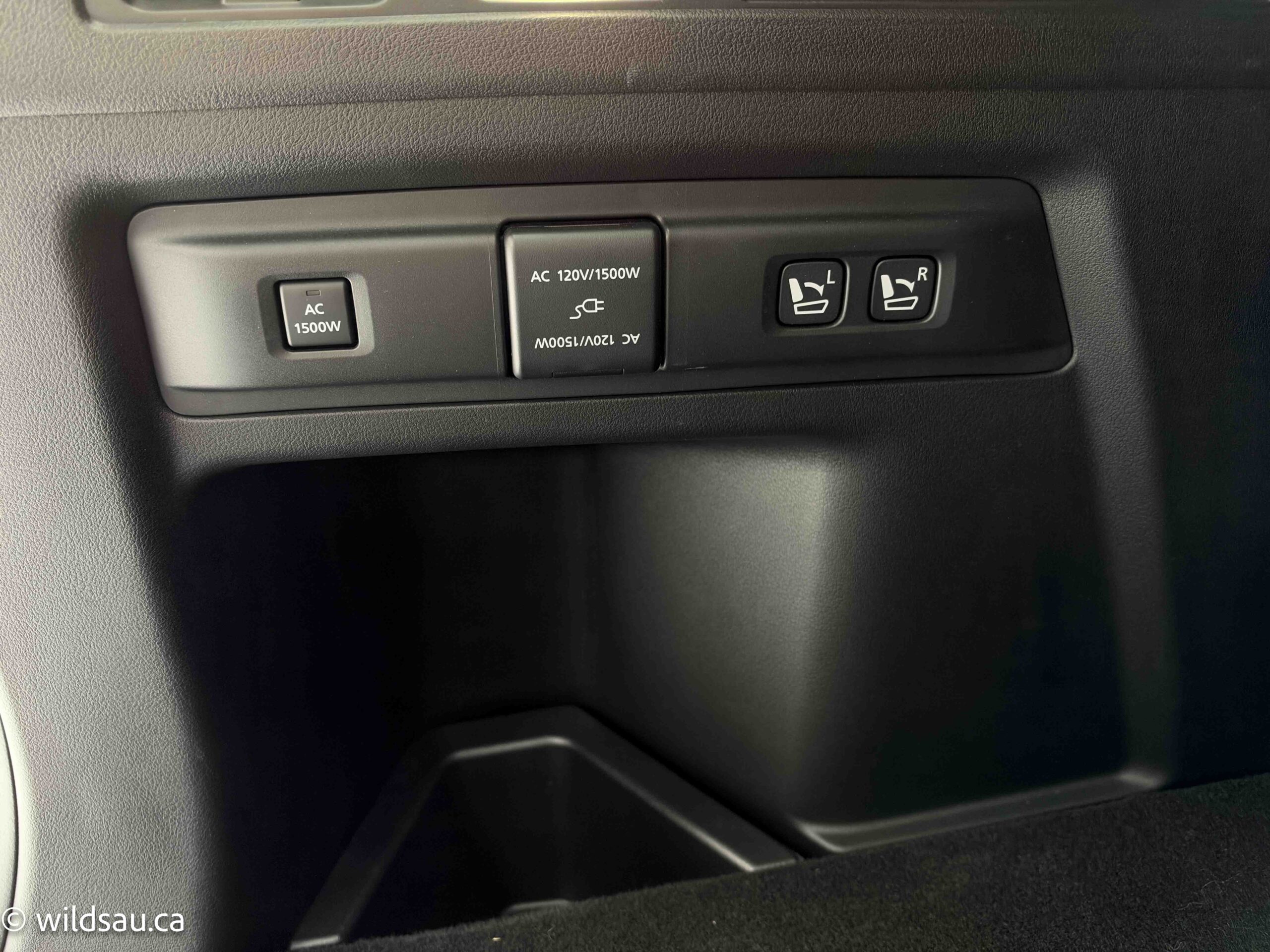
Popping the power liftgate reveals a generous cargo area. Mazda lists 1,130L of space behind the second row, with additional storage under the floor. A couple of bag hooks and a 12V accessory plug finish things off.
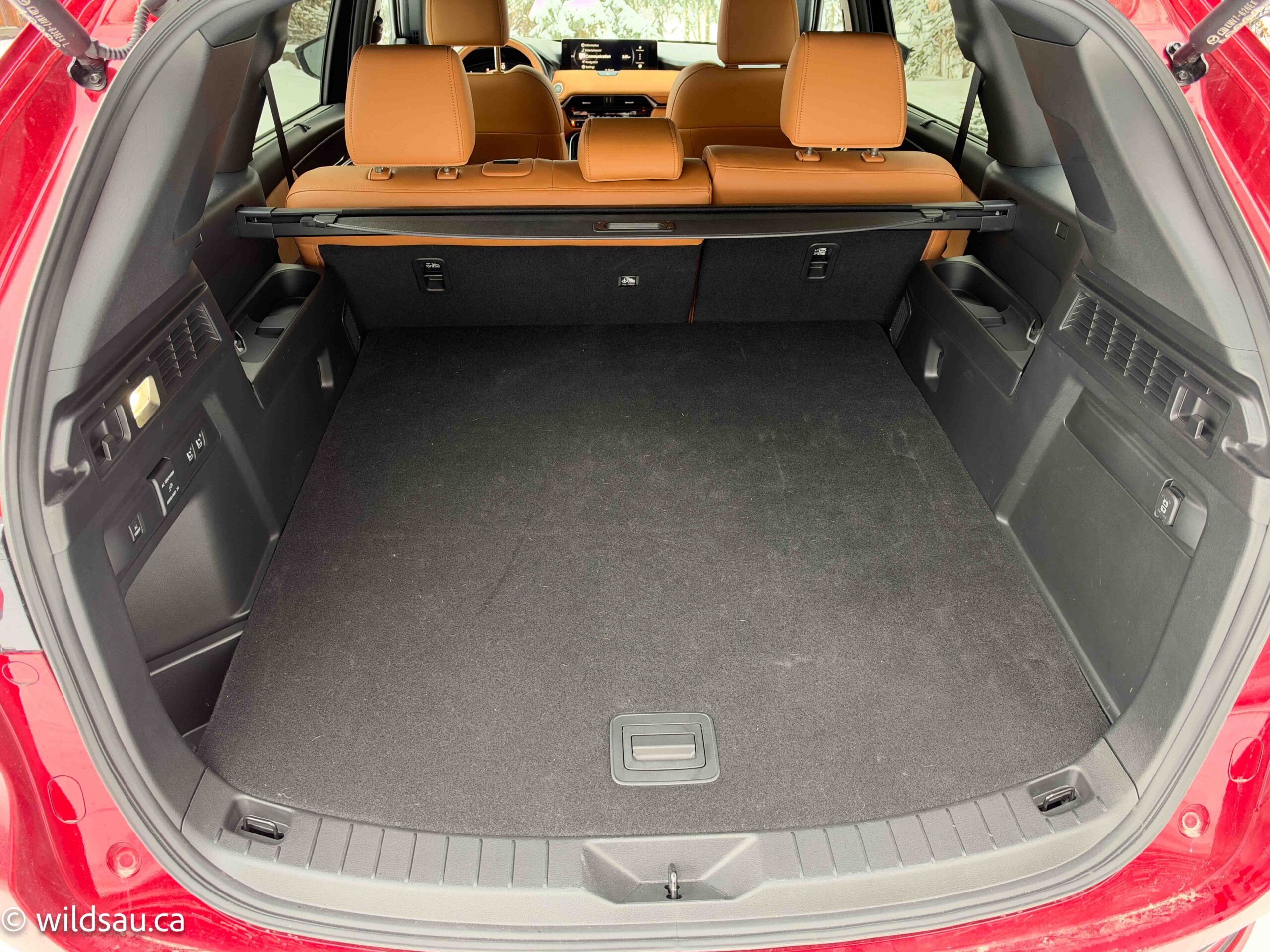
Folding the rear seats down is easy thanks to power-folding buttons in the trunk and boosts cargo space to a massive 2,132L.
One of the advantages of the CX-70 over the CX-90 is that you don’t have to fold away a third row to access that cargo space. If you rarely carry more than five people, the two-row layout makes a lot of sense.
Under the Hood
The motivator for the CX-70 PHEV is a 2.5L four-cylinder engine paired with an electric motor and a 17.8 kWh battery. Combined system output is 323 horsepower when using 93-octane fuel, or 319 horsepower with 87-octane fuel. Torque is 369 lb-ft regardless of fuel grade.
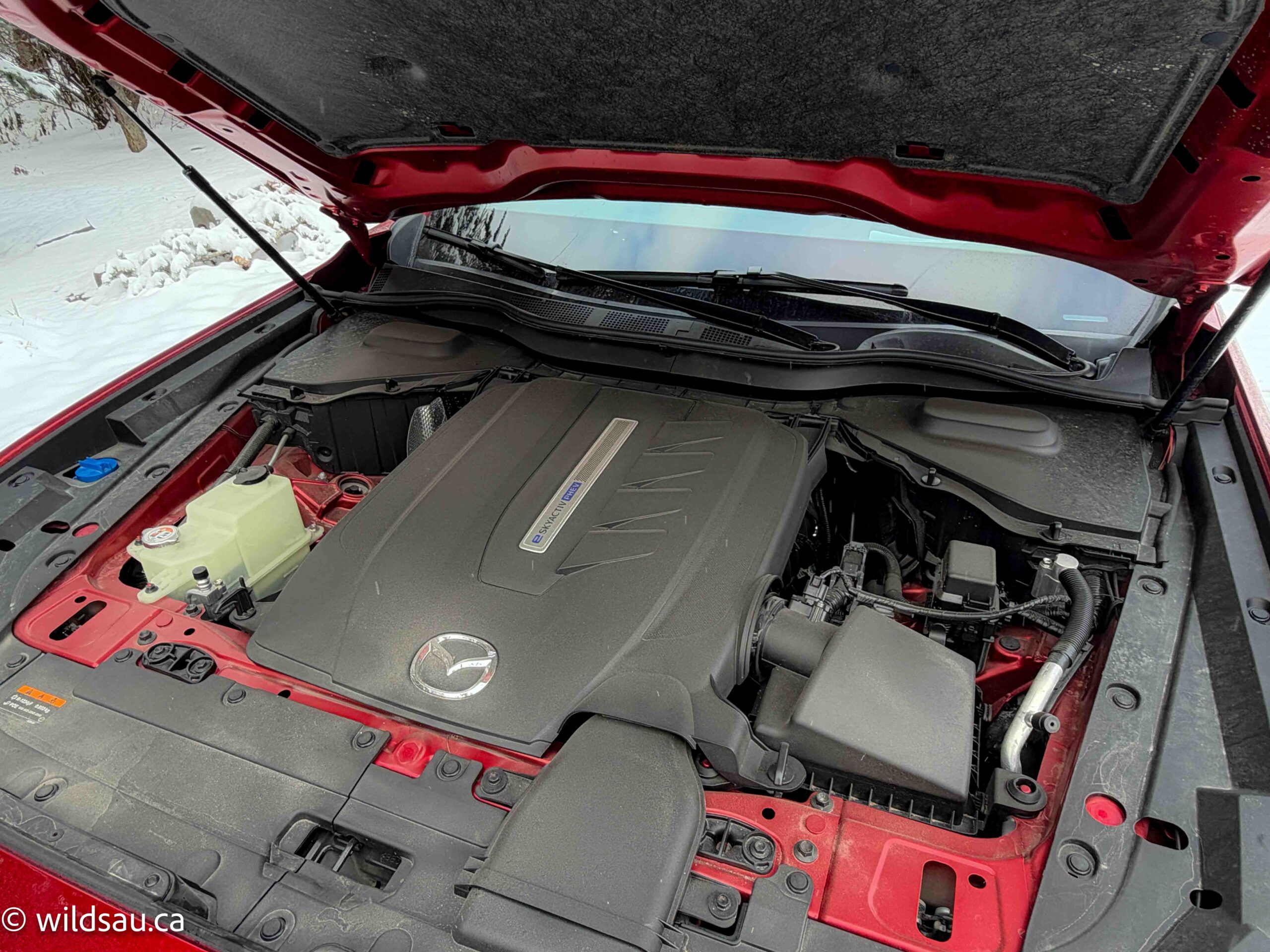
Mazda estimates combined electric and gasoline consumption at 3.8 Le/100 km, with an electric range of 43 km. Once the battery is depleted, the vehicle operates as a conventional hybrid, with gasoline-only consumption rated at 9.8 L/100 km in the city, 8.5 on the highway and 9.2 combined.
The powertrain is mated to an eight-speed automatic transmission and Mazda’s i-ACTIV all-wheel-drive system. Unlike some competitors, Mazda uses a conventional automatic rather than a continuously variable transmission.
Premium unleaded is recommended, although the engine can run on regular fuel with a very minor reduction in power.
The PHEV can tow up to 3,500 pounds, which is less than the 5,000-pound rating of the mild-hybrid CX-70 Signature. That’s worth keeping in mind if towing is on your shopping list.
The Drive
The PHEV feels powerful off the line and is incredibly smooth in EV mode. I never needed more power while driving on electricity alone. In addition, when you step on it and the vehicle combines electric and gasoline power, the PHEV feels very quick – I suspect it probably feels quicker than it actually is.
A previously reviewed version of this vehicle lurched on occasion and sometimes felt laggy when switching between power modes. None of these issues came up here, and whatever Mazda has done made the transition between electric and gasoline propulsion as seamless as possible.
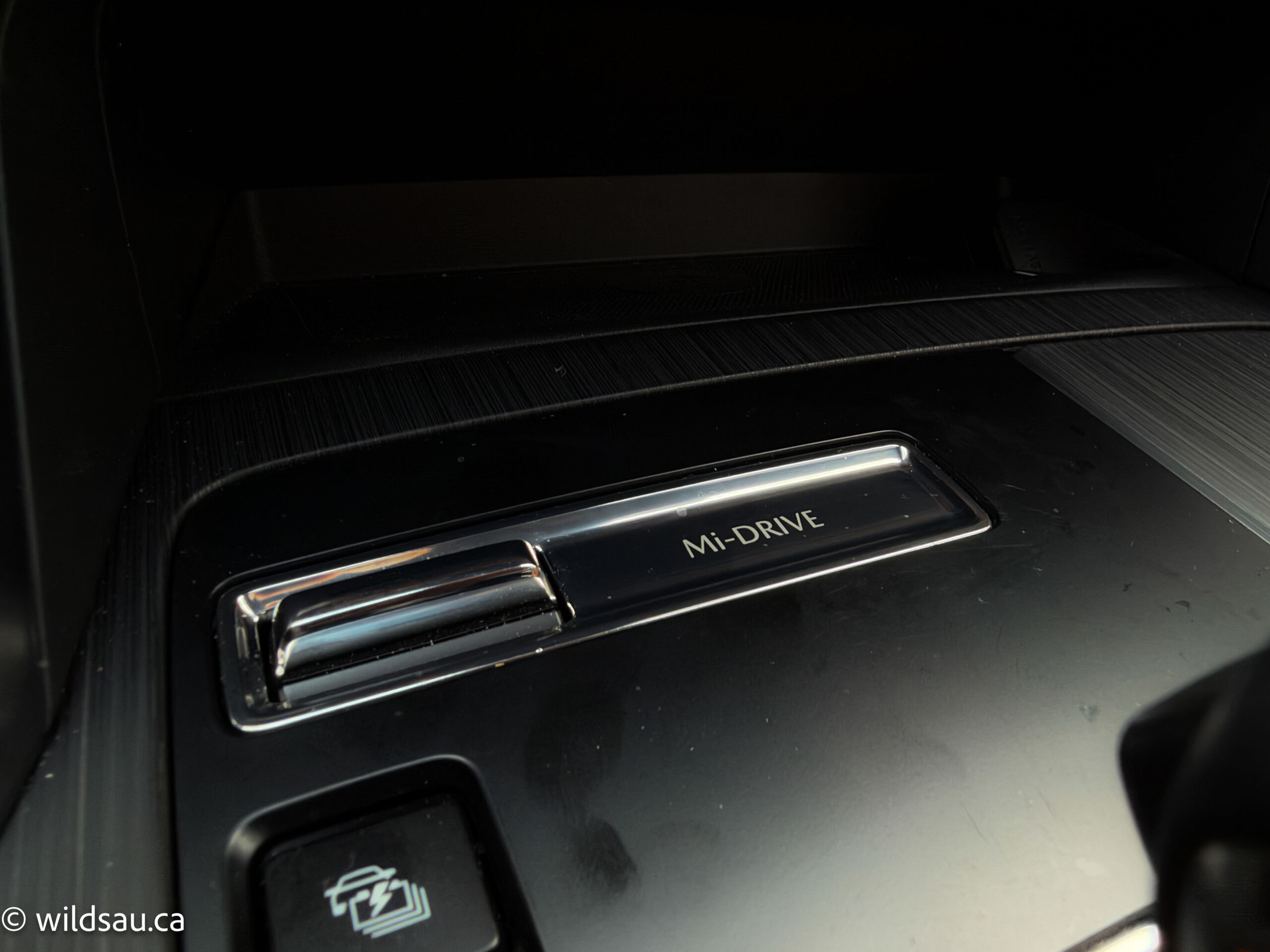
Drivers can choose between Normal, Sport, Off-road and EV modes. The EV mode allows you to make the most of the battery charge, while the other modes adjust the vehicle’s behaviour for different driving conditions. Step on it in Sport mode and it takes off almost comically fast!
The eight-speed transmission shifts smoothly, and this time around, it always felt like it was in the right gear.
The PHEV’s ride is very good. Numerous passengers commented on how smoothly the vehicle drove. Handling is great for a beast of this size. Can you feel its size and mass in the corners? Yes. But it feels like, the faster you drive it, the more athletic it gets – it feels nicely planted and is highly competent when it comes to traction and grip. I usually don’t give a shout-out to the turning circle, but for the size of this vehicle, it’s incredibly tight and makes for easy parking and maneuvering.
One of my biggest complaints previously were the regenerative brakes – they went from very grabby to mushy, but here is another point that Mazda appears to have addressed. These brakes worked beautifully and did not intrude in the driving experience.
The CX-70 is quiet in almost all driving situations and visibility out of the vehicle is mostly good.
PHEV Details
The charging port is located behind a flap on the right rear quarter, similar in appearance to the fuel door. There is storage space under the trunk floor for the charging cable, which is handy if you’re travelling but I found it a struggle to get the cable into the designated space cleanly.
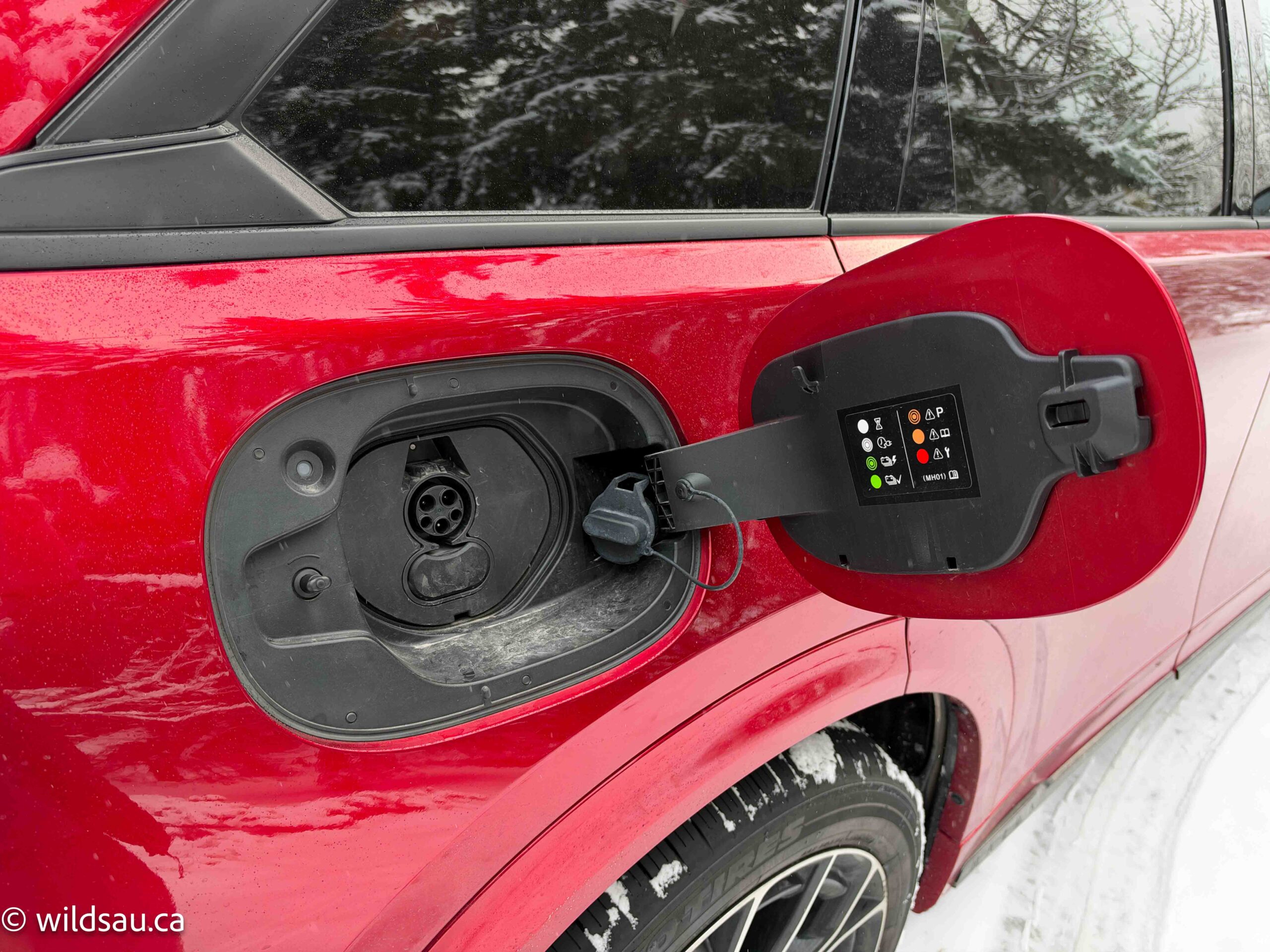
The 17.8 kWh battery takes approximately 6.4 hours to charge from 20% to 80% using a Level 1 household connection. With a Level 2 charger, that drops to about 1.3 hours.
Mazda estimates an electric range of 43 km. That won’t get you across the province, but it can cover a lot of everyday driving. If your commute is short and you can charge at home, there’s a good chance you’ll be able to complete many trips without using gasoline.
You can also choose a target charge level while driving. If the battery drops below that level, the gasoline engine can be used to charge it back up. Perhaps you want to save your battery charge for city driving and use the gasoline engine on the highway. It’s a great idea, although using the engine to charge the battery isn’t necessarily the most efficient way to travel.
Once you’ve exhausted the electric-only range, the vehicle reverts to normal hybrid operation, which means there’s no range anxiety to be had here. With a full battery and fuel tank, Mazda estimates a total driving range of 801 km.
The beauty of a plug-in hybrid is that you get the benefits of electric driving for shorter trips without having to plan your life around charging stations on longer journeys. For people who aren’t ready to go fully electric, this is likely the most appealing and practical compromise.
Nitpicks
The outer edges of the right- and left-most dashboard vents stick out quite far when the doors are open, and I smashed my knee on them several times – taller people beware! I did the same when I reviewed these vehicles previously, and did it again here.
It’s a small thing, but it’s one of those details that you notice every time you get in or out of the vehicle. In a vehicle that otherwise feels so carefully designed and luxurious, it’s an odd oversight.
The Verdict
WAF (Wife Approval Factor) was high. She really loved the styling and said it looked amazing inside and out. She didn’t love how big it felt on the road but really appreciated the overall smoothness of the ride and operation.
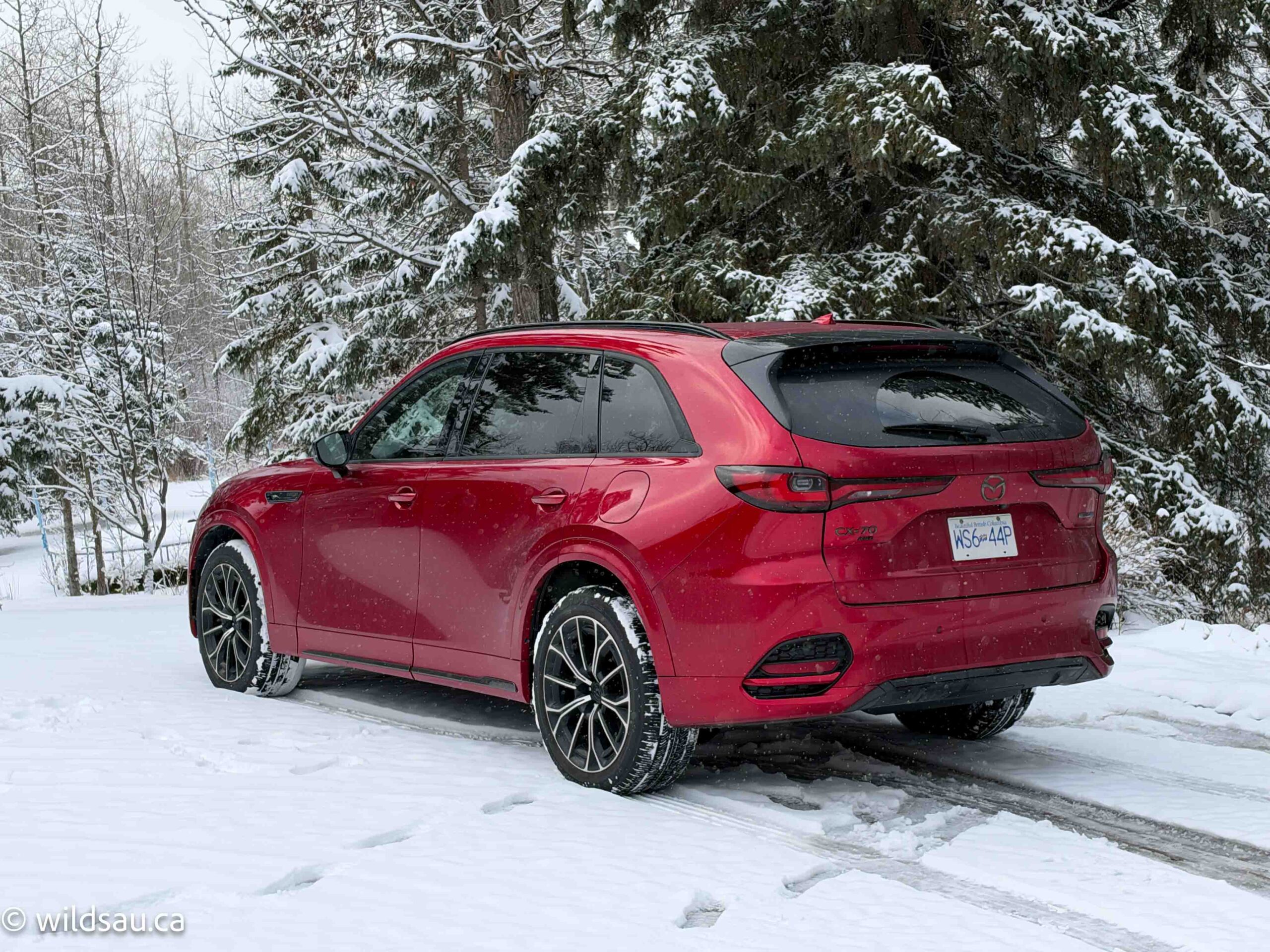
The CX-70 is simply a two-row version of the CX-90, and the PHEV adds another layer of appeal. You get the same spacious, luxurious cabin and impressive styling, along with the ability to drive on electric power for shorter trips.
With the refinements that Mazda has made, the PHEV CX-70 is a winner in my books. It has the power, the performance, the efficiency and the everyday electric range that buyers are after.
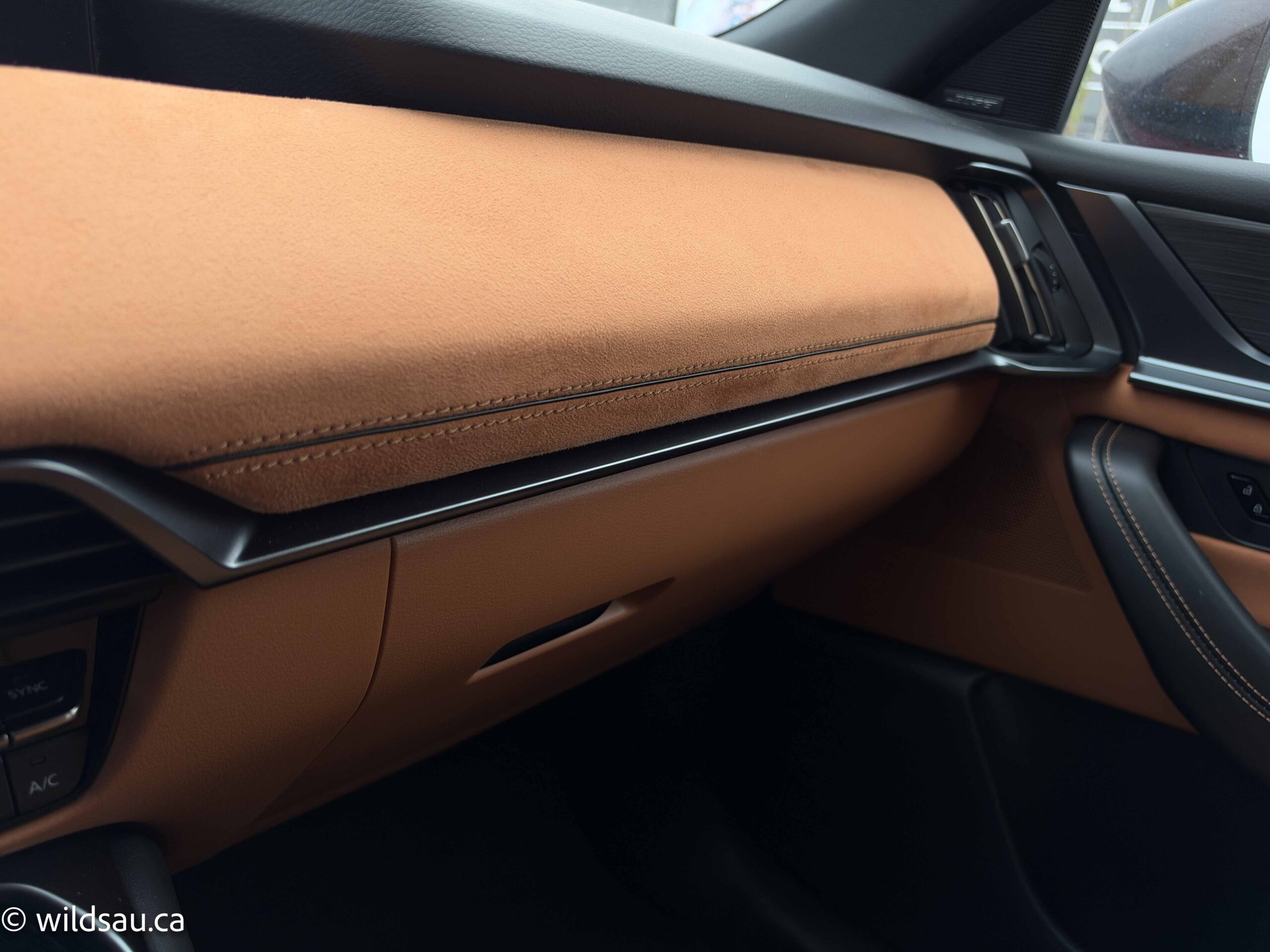
The Signature trim is a lovely place to spend time. The materials, seats, technology and overall presentation give the CX-70 a genuinely premium feel. And if you don’t need a third row, the two-row layout makes the vehicle a more practical choice for many families.
At $70,995 as tested, it’s not inexpensive. But you’re getting a lot of vehicle for the money, including a plug-in hybrid powertrain, all-wheel drive, plenty of luxury and a substantial amount of cargo space.
If you like the CX-70 but want to reduce your gasoline consumption without committing to a fully electric vehicle, the PHEV deserves a look. Just be sure you have somewhere to plug it in regularly, because that’s where you’ll get the most benefit from the system.
Disclosure: Vehicle was provided by Mazda Canada.